3 or 4 Components
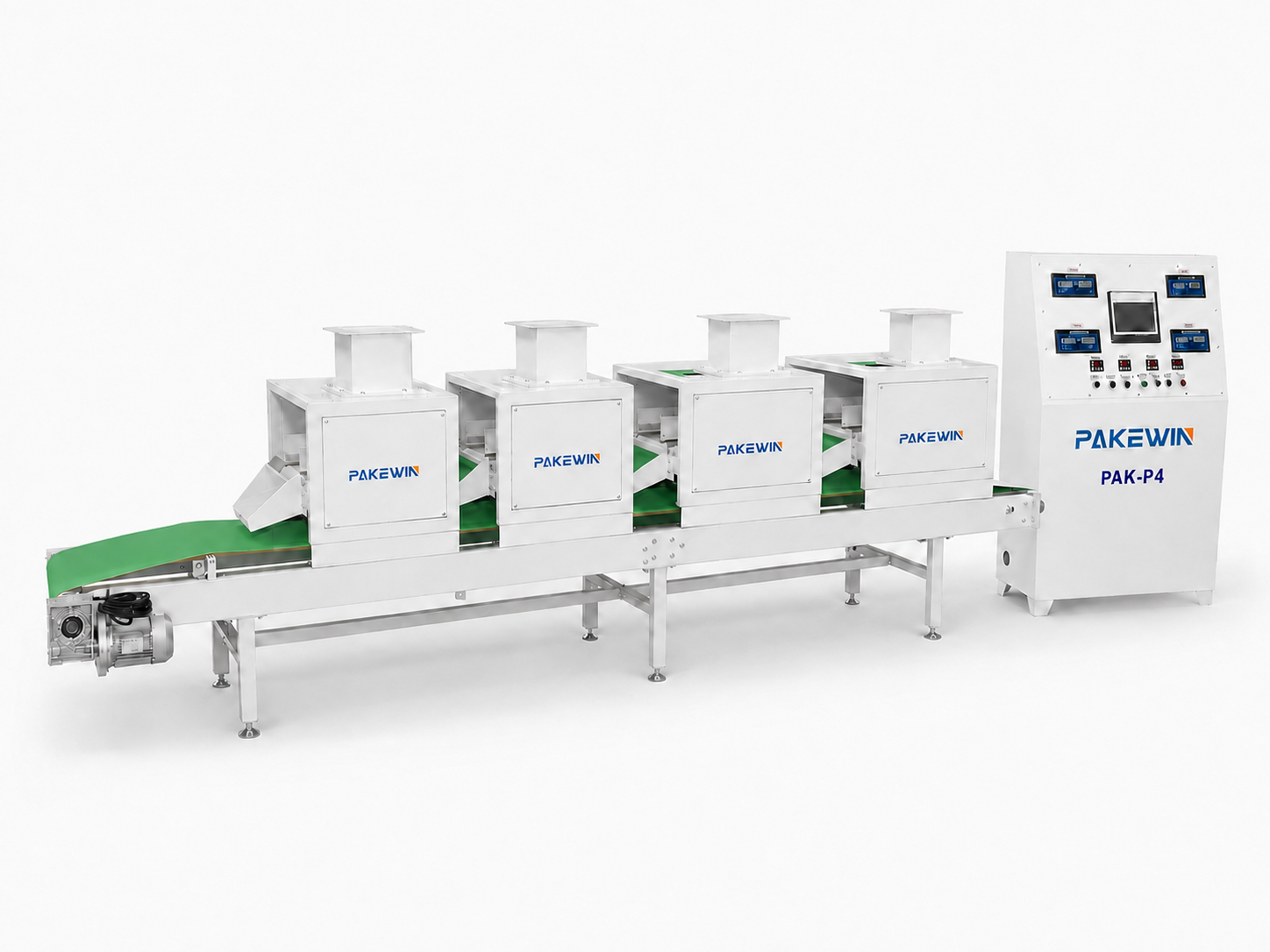
Choose PAK-P3 for three material channels or PAK-P4 for four, according to the number of rice varieties in each recipe.
 Request a Quote
Controlled belt weighing and proportioning for three- or four-component rice recipes, with centralized recipe management and packaging-line integration.
Process Weighing · Three or Four Components
The PAK-P3 and PAK-P4 are multi-component rice blending machines designed to meter separate rice streams by belt weight and combine them on one collecting conveyor. PAK-P3 supports three-component recipes; PAK-P4 supports four-component recipes.
Each dosing channel can operate independently or under centralized control. Operators set the required recipe through the touch screen, while the PLC coordinates weighing and discharge. The system is intended for rice mills, grain processors and packaging plants that need repeatable blend ratios before bagging.
Request a Rice Blending Proposal View Process Weighing Systems
Choose PAK-P3 for three material channels or PAK-P4 for four, according to the number of rice varieties in each recipe.
Both configurations have a stated capacity of up to 6 tonnes per hour, subject to material and line validation.
Touch-screen operation and Siemens PLC control support adjustable proportions and coordinated multi-channel production.
Model Comparison
Published values are reference data. Final capacity, precision, utilities and dimensions are confirmed against the product samples, recipe and plant layout.
How It Works
Separate rice varieties enter dedicated inlet hoppers so each component can be metered as an independent stream.
Each channel measures and delivers its component according to the selected recipe and production target.
The measured components discharge onto the U-shaped collecting conveyor, which is designed to limit leakage during transfer.
The finished blend can move to storage, inspection, weighing and bagging equipment through a coordinated production-line interface.
Applications
The system is primarily designed for rice blending. Typical projects include premium rice recipes, grade adjustment, regional variety blends and controlled blending before retail or bulk packaging.
Combine different rice varieties or grades according to a controlled recipe before packing.
Evaluate compatible free-flowing grains through sample testing and confirm cleaning, carryover and breakage requirements.
Place controlled blending upstream of bagging to support repeatable products across scheduled production runs.
Configure the number of active channels and target proportions around the customer's product portfolio.
Control & Integration
The touch-screen and Siemens PLC control architecture supports recipe setting, independent channel operation and centralized multi-channel control. A reserved communication interface can support production-data exchange and printing when specified for the project.
The standard collecting conveyor length is 4500 mm and can be engineered for the site. PAKEWIN confirms inlet and discharge heights, upstream supply, downstream capacity, electrical standard, control signals, cleaning access and operator language before manufacturing.
Selection Information
Provide the number of rice components, each material's name and bulk density, minimum and maximum recipe percentages, required tonnes per hour, target blending precision, current process layout, available conveyor height, destination electrical standard and downstream packing-machine capacity. Representative samples are recommended for validation.
Related Equipment
Combine the PAK-P3 or PAK-P4 with a rice bagging machine, in-line checkweigher, conveying and palletizing equipment. Explore complete packaging lines or ask PAKEWIN to balance the line around your required output.