
July 14, 2026 | Rice Bagging | By PAKEWIN Engineering Team
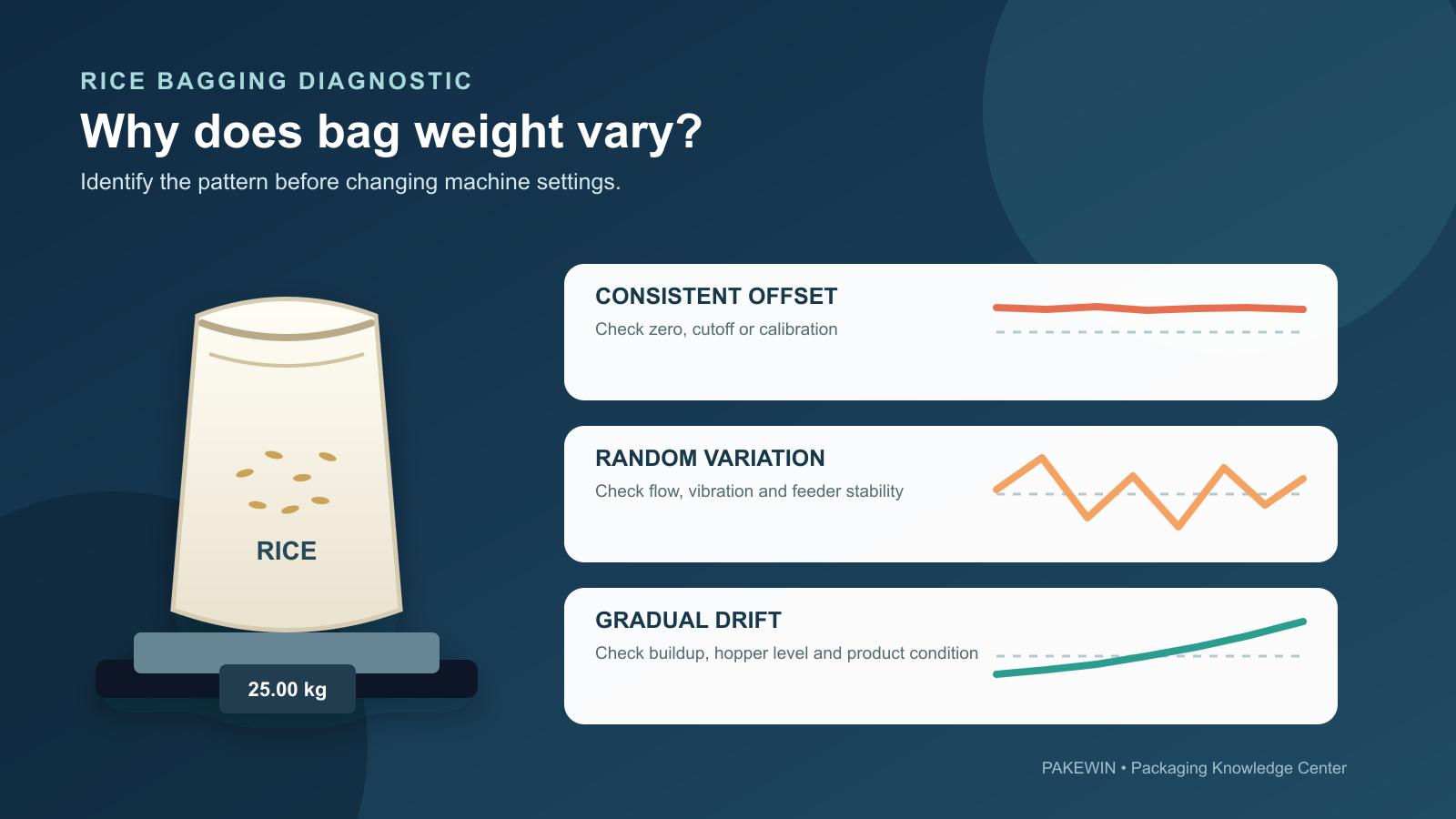
Rice bagging is often considered the final step in the production process, but it plays a critical role in product quality, operational efficiency and customer satisfaction. Even a well-designed packaging line can experience issues if equipment settings, maintenance or bag handling are overlooked.
Whether you package rice, beans, grains, feed or pet food, understanding the most common bagging problems can help reduce downtime, minimize product loss and improve overall production performance.
1. Inaccurate Weighing
Accurate weighing is essential for maintaining product consistency and avoiding customer complaints.
Small deviations in bag weight can lead to material loss, additional costs and compliance issues.
Common causes include:
• Unstable product feeding
• Incorrect load cell calibration
• Machine vibration
• Poor material flow
Recommended solutions:
- Calibrate the weighing system regularly.
- Keep the machine on a stable foundation.
- Maintain a consistent product flow.
- Inspect load cells periodically.
2. Excessive Dust During Bag Filling
Dust is a common challenge when packaging rice, grains and other free-flowing materials.
Besides creating an unpleasant working environment, dust can reduce weighing accuracy, contaminate sealing areas and increase maintenance requirements.
Recommended solutions:
- Install an efficient dust collection system.
- Reduce product drop height.
- Optimize filling speed.
- Check the bag clamping system.
3. Broken or Damaged Bags
Bag breakage often occurs during filling, conveying or palletizing.
Possible reasons include excessive filling speed, poor bag positioning or unsuitable conveyor settings.
Recommended solutions:
- Match machine settings with bag material.
- Avoid overfilling.
- Inspect bag clamps regularly.
- Ensure smooth product transfer.
4. Low Packaging Efficiency
If the bagging line cannot reach the expected production capacity, the cause is often found in the overall process.
Improving efficiency usually involves:
- Optimizing product feeding.
- Reducing unnecessary manual operations.
- Synchronizing conveyors and bagging equipment.
- Performing preventive maintenance.
5. Unstable Palletizing
Packaging quality does not end when the bag is sealed.
Poor pallet stacking can lead to unstable loads, damaged products and higher transportation costs.
Recommended solutions:
- Keep bag weights consistent.
- Use proper stacking patterns.
- Maintain uniform bag dimensions.
- Consider automatic robotic palletizing.
Final Thoughts
Most rice bagging problems can be prevented through proper equipment selection, regular maintenance and optimized production processes.
Small improvements in weighing accuracy, dust control and bag handling can have a significant impact on packaging quality and operating costs.
For manufacturers packaging rice, beans, grains, feed or pet food, choosing reliable equipment and maintaining a well-designed packaging line is one of the most effective ways to improve long-term productivity.
Frequently Asked Questions
Why is weighing accuracy important?
Accurate weighing reduces product giveaway, improves consistency and helps meet customer requirements.
How can dust be reduced?
Dust can be minimized by using dust collection systems, improving bag sealing and optimizing filling speed.
What causes broken bags?
Incorrect machine settings, poor bag quality, excessive filling speed and improper bag handling are the most common reasons.
How can packaging efficiency be improved?
Regular maintenance, stable product feeding and coordinated production lines are the most effective methods.
Is automatic palletizing necessary?
For medium and high-capacity production lines, automatic palletizing improves productivity, reduces labor costs and ensures consistent pallet quality.