
September 18, 2026 | Packaging Automation Strategy | By PAKEWIN Engineering Team
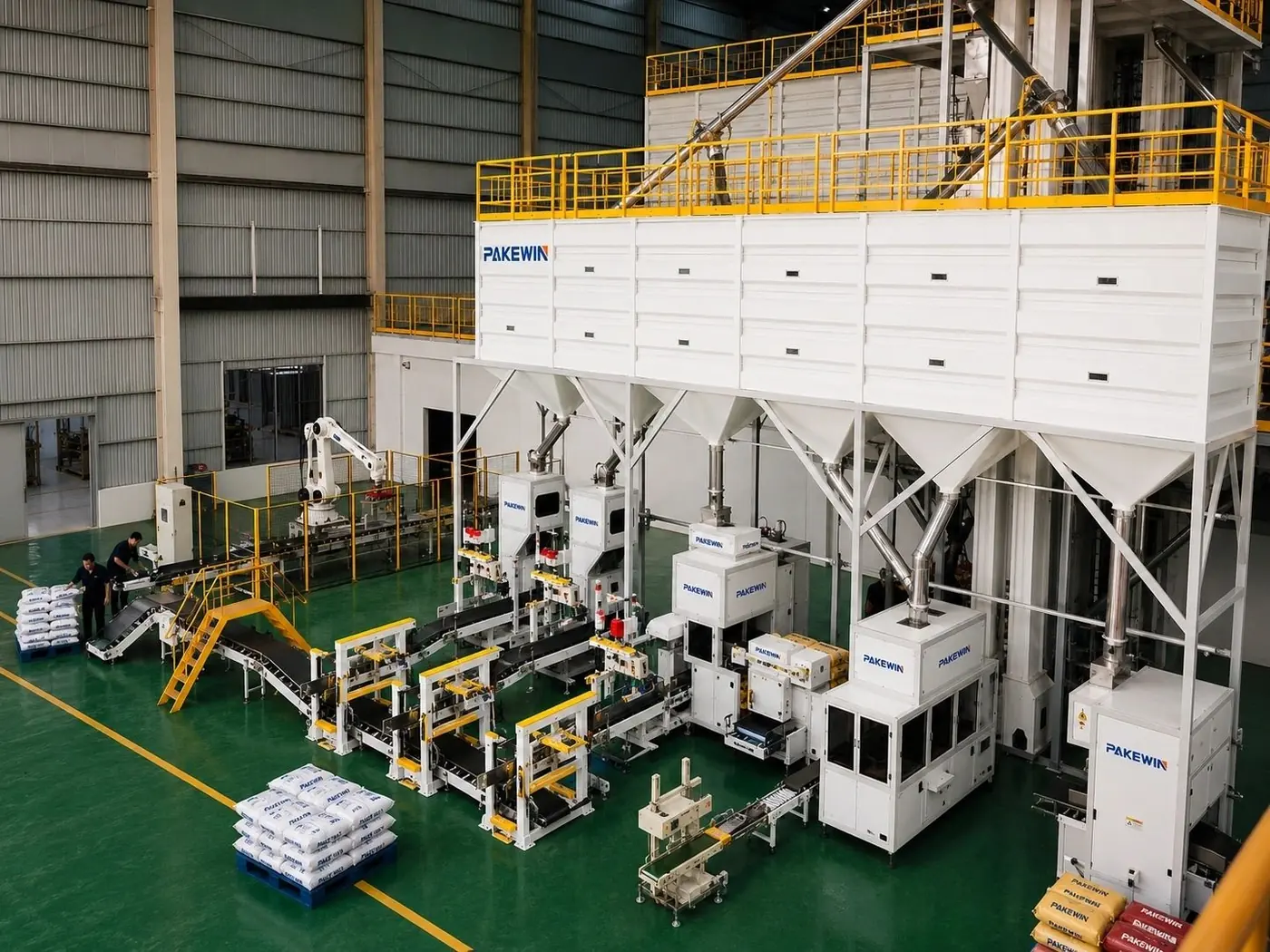
Planning a phased packaging line? Send your product, bag sizes, current output, target capacity and layout to PAKEWIN for an initial equipment review. Send Your Packaging Requirements
Quick Answer
A packaging machine becomes part of a scalable platform when future products and modules can be added through planned mechanical, electrical, controls, safety and data interfaces. Buying a machine with unused floor space beside it is not an expansion strategy. The line must have documented capacity, transfer conditions, communication rules, utility allowances and ownership boundaries.
For most manufacturers, the practical route is to automate the current constraint first, while designing the next two or three stages before placing the first order. That may mean starting with weighing and bagging, then adding inspection, case packing, robotic palletizing or production-data collection when the business case is ready.
Why Scalable Packaging Automation Matters in 2026
The industry direction is becoming clearer. The PPMA Show 2026 preview highlights machinery, robotics, vision systems and automation, together with smart manufacturing and operational efficiency. Its program also frames flexibility as a current manufacturing requirement as materials and production needs change.
PMMI's 2026 State of the Industry release describes a market shaped by flexibility, automation, SKU proliferation and changing packaging requirements. It specifically notes stronger interest in modular and upgradeable systems. A separate PMMI trend update says flexible machinery, automation and AI are moving from experiments toward practical tools for efficiency, downtime reduction and long-term growth.
These trends do not mean every factory needs a fully automated line immediately. They mean buyers should stop treating each machine as an isolated purchase. A lower-cost machine can become expensive if it cannot exchange signals, accept future conveyors, support additional recipes or fit the next package format.
What Is a Packaging Automation Platform?
A packaging automation platform is a line architecture that can grow without redesigning every surrounding process. It combines physical equipment with standardized interfaces, operating rules and documented performance assumptions.
Depending on the application, the platform may connect:
- Product feeding, weighing or dosing
- Bagging, pouch filling or vacuum packaging
- Sealing, sewing, coding and labeling
- Checkweighing, metal detection or vision inspection
- Conveying, accumulation and rejection
- Case packing, palletizing and stretch wrapping
- Recipe management, alarms and production reporting
The word platform should not be used as a marketing label. Ask the supplier to show exactly which modules can be added, what must change, who controls each interface and how the expanded line will be tested.
Eight Design Decisions That Determine Whether a Line Can Grow
1. Define the Product and Package Envelope
Document today's products and the realistic future range: bulk density, flow behavior, dust, oil or moisture, target weight, pack dimensions, bag material and closing method. Do not specify an unlimited range. Wider capability can require larger frames, more change parts, slower output and higher cost.
Separate three groups: formats required at startup, formats expected within two years and possibilities that only need space or an interface allowance. This prevents speculative features from making the first phase unnecessarily complex.
2. Balance Capacity Across the Whole Line
A platform is only scalable if product can move through it. Record sustained accepted output—not only the maximum cycle rate—for each process. Include changeovers, refills, rejects, cleaning and normal short stops.
If a bagger produces 12 accepted bags per minute but the inspection and palletizing area can handle only nine, the extra nameplate speed does not create saleable output. Provide controlled accumulation where it protects upstream equipment, but do not use long conveyors to hide a permanent bottleneck.
3. Standardize Mechanical Transfer Points
Define conveyor height, direction of travel, usable width, package orientation, pitch, maximum load and transfer method. For bags, verify support during filling, closing and direction changes. For cartons, define flap condition and orientation. For robots, confirm the presentation pattern and pickup window.
Reserve safe access for cleaning, maintenance and future change parts. Expansion space must include guarding, doors, platforms, electrical cabinets and operator routes—not only the footprint of the next machine.
4. Plan Electrical, Controls and Safety Interfaces
Agree on voltage, frequency, control architecture, network protocol, I/O handshakes and fault behavior. At minimum, connected machines need clear definitions for ready, run permission, starved, blocked, fault, emergency stop and reset conditions.
The safety concept must be reviewed for the final cell, not copied from one machine. Adding a robot or conveyor can change access, stopping zones and restart risks. The responsible integrator should define how emergency stops, guards and safe recovery work across equipment boundaries and confirm compliance for the installation country.
5. Design Recipes and Changeovers for Real SKUs
A flexible packaging line needs more than a recipe name on an HMI. List which settings are stored automatically, which adjustments are manual and which change parts are required. Confirm how the operator verifies the correct bag, label, code, inspection limits and pallet pattern after changeover.
Measure changeover from the last good pack of the previous SKU to the first verified good pack of the next SKU. A short mechanical adjustment is not a complete changeover if cleaning, material replacement, coding and quality release take much longer.
6. Add Inspection as a Data-Producing Module
A future-ready line should be able to add or upgrade checkweighing, metal detection, vision or code verification without creating an uncontrolled reject process. Define where inspection occurs, how rejected packs are removed, how reject confirmation works and what data must be retained.
PAKEWIN's dynamic checkweigher and industrial metal detector illustrate two inspection modules that can be considered within a complete packaging line. Final selection and validation must match the product, package and applicable quality plan.
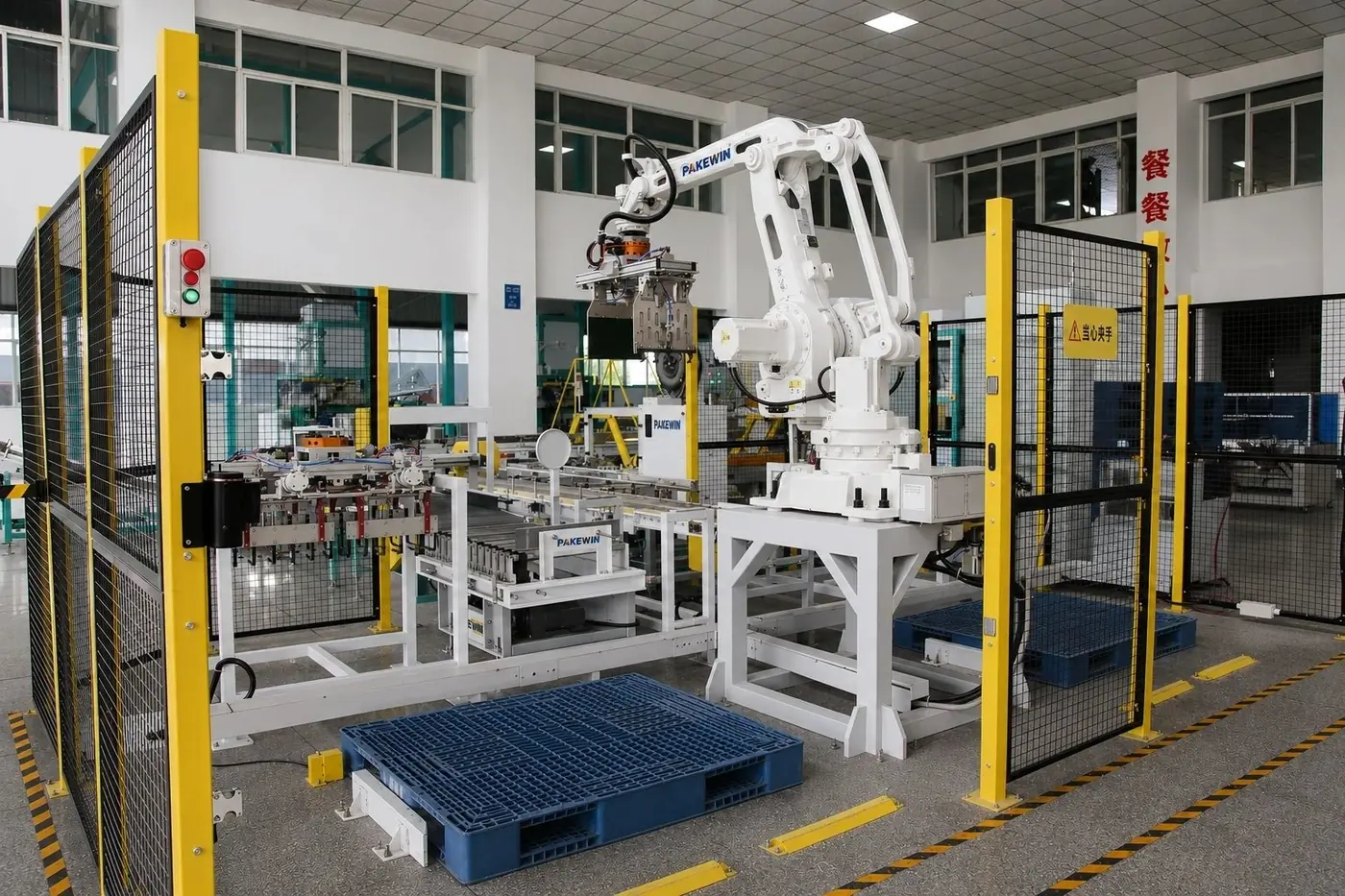
7. Make Robotic Automation a Defined Phase
Robots are most effective when product presentation, gripper design, rate, pallet pattern, safety and downstream pallet handling are engineered together. Do not postpone every robot decision until after the upstream line is installed. A later robot may need different conveyor spacing, bag orientation, ceiling clearance or pallet access.
During the first phase, reserve the correct transfer height, control signals, floor loading, utilities and guarded area. Compare the future robot's required rate against sustained incoming flow and include pattern changes, slip sheets, pallet exchange and recovery after a stop.
8. Build a Useful Data Layer Before Adding AI
Start with trustworthy machine states, counts, reject reasons, alarm history, recipes and downtime categories. Assign consistent equipment names and timestamps. Decide who owns the data, how long it is retained and how remote access is secured.
AI can assist with troubleshooting, documentation and pattern detection, but it cannot correct missing sensors, inconsistent reason codes or unreliable production counts. PMMI's 2026 reporting describes early practical AI uses as tools that augment technical teams. That is a sound expectation: first create reliable operating data, then evaluate a specific use case with measurable value.
A Three-Phase Expansion Roadmap
Phase 1: Stabilize the Core Packaging Process
Install the equipment that removes the verified constraint. Establish accepted output, weight or dose control, pack quality, changeover procedure and operator responsibilities. Include future-ready transfer points, spare control capacity and documented interfaces.
Phase 2: Connect Quality and Downstream Handling
Add inspection, automatic rejection, coding verification, conveyors or case handling when the core process is stable. Rebalance the line after each addition and repeat acceptance testing under normal product variation.
Phase 3: Add Robotics and Production Intelligence
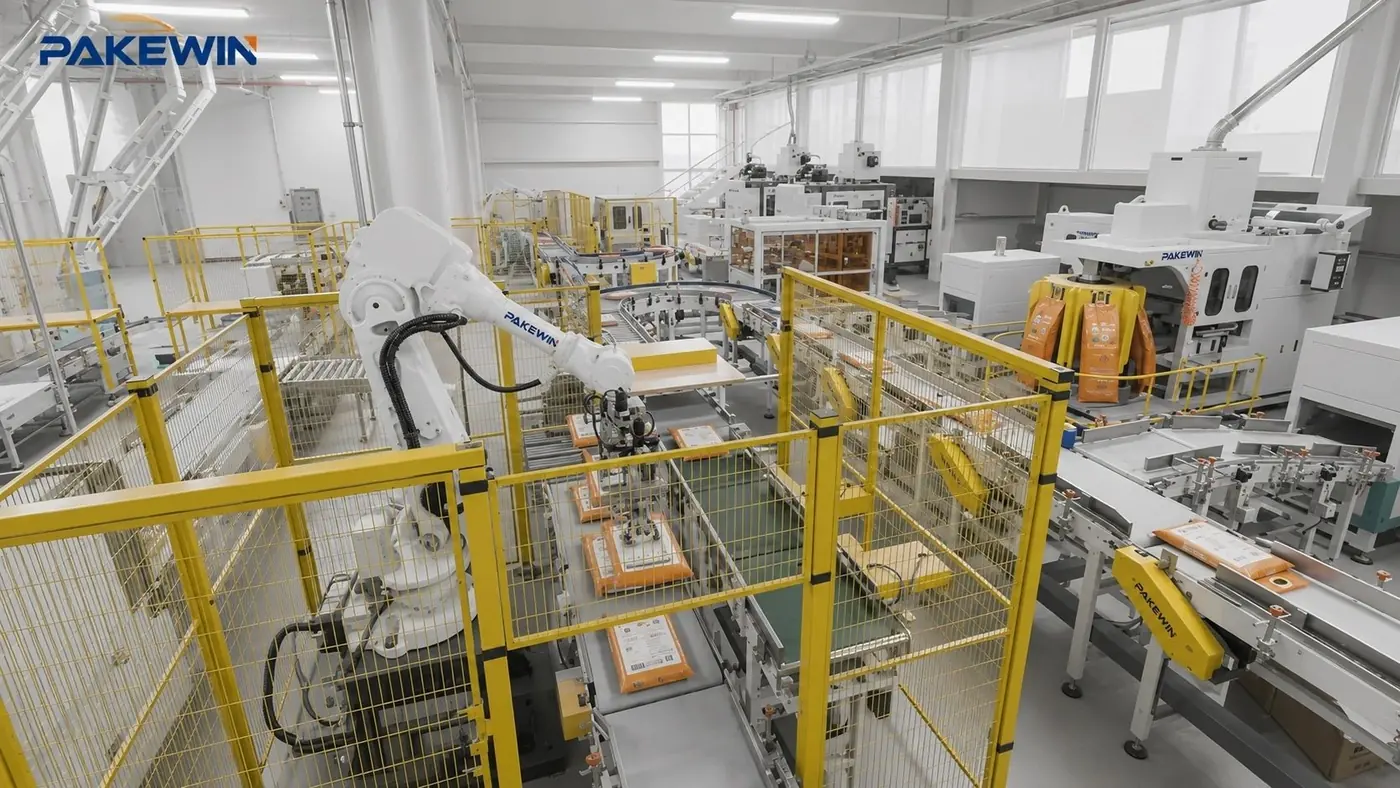
Introduce robotic palletizing, automatic pallet handling or higher-level reporting when volume, labor and SKU data justify them. Use actual Phase 1 and Phase 2 performance to size the system instead of relying on early estimates. PAKEWIN's automatic packaging line solutions show representative ways to connect primary packaging, inspection, conveying and end-of-line automation.
What to Put in the Request for Quotation
International buyers can compare proposals more accurately when every supplier receives the same application data. Include:
- Product names, behavior, bulk density and sample availability
- Current and planned package formats, dimensions and materials
- Required sustained accepted output for each key format
- Shift pattern, operating environment and cleaning method
- Existing upstream and downstream equipment
- Available floor plan, ceiling height and maintenance access
- Electrical power, compressed air and extraction requirements
- Required inspection, coding, rejection and traceability
- Startup scope and likely expansion phases
- Preferred control and communication standards
- Factory acceptance and site acceptance criteria
- Installation country, documentation language and service expectations
Request a line-layout drawing and an interface list, not only individual machine quotations. The proposal should identify included equipment, exclusions, performance assumptions, utility boundaries, integration responsibility and changes required for future phases.
Acceptance Tests for a Modular Packaging Line
A factory acceptance test should prove the startup scope and the interfaces needed for expansion. Test representative products and packaging materials across the agreed operating range. Record:
- Sustained accepted output and reject rate
- Weight, seal, closure and package-quality results
- Starved and blocked response between machines
- Alarm, emergency-stop and controlled-restart behavior
- Recipe selection and changeover steps
- Reject activation and reject confirmation
- Data counts, timestamps and reason codes
- Access for cleaning, maintenance and change parts
- Spare I/O, network ports and documented future interfaces
A short demonstration at maximum speed does not prove platform capability. The test should reflect normal material variation, stops, restarts and the operating time agreed for the project.
Five Red Flags When a Supplier Says “Expandable”
- Future modules are mentioned, but no interface drawing is available.
- Capacity is quoted only as maximum machine speed.
- The proposal does not identify the line-controls and safety integrator.
- Recipes store a product name but not the settings needed for changeover.
- Expansion requires replacing the original PLC, conveyor layout or electrical cabinet without that limitation being disclosed.
A credible supplier may still identify constraints. Clear limits are more useful than a promise that one line can handle every future product.
Frequently Asked Questions
Is modular packaging machinery always cheaper?
Not necessarily. A phased project can reduce initial investment and implementation risk, but reserved capacity, standardized interfaces and later integration still have costs. Compare total installed cost across the planned phases.
Should every machine come from one supplier?
No. A multi-supplier line can work well when one party owns integration and the mechanical, controls, safety and acceptance interfaces are documented. Without clear ownership, faults between machines can be difficult to resolve.
How much spare capacity should a packaging line have?
There is no universal percentage. Base the allowance on demand scenarios, SKU mix, shift pattern, planned expansion and the cost of future disruption. Oversizing every machine can create unnecessary capital and operating cost.
Can an existing packaging line be converted into a scalable platform?
Often, but begin with an interface and constraint audit. Review controls, safety, conveyor transfers, available space, utility capacity, component obsolescence and documentation before choosing retrofit modules.
What information does a supplier need to plan future expansion?
Provide the expected product and package range, output by SKU, site layout, utilities, current equipment, quality controls, labor plan and likely expansion sequence. Real samples and process videos make the assessment more reliable.
Where should a factory begin?
Begin with the process constraint or recurring loss that can be measured. Define the final architecture, then implement the smallest reliable first phase that improves accepted output, quality or handling without blocking later stages.
Plan the Architecture Before Buying the First Module
The strongest packaging investment is not automatically the fastest or most automated machine. It is a system with a stable startup scope and a credible route to new products, packaging materials, inspection, robotics and data.
PAKEWIN can review your product, package, required output, current process and factory layout, then propose a phased equipment configuration with defined interfaces and expansion points. Send your application details for a preliminary packaging automation assessment.