
July 25, 2026 | Grain Bagging | By PAKEWIN Engineering Team
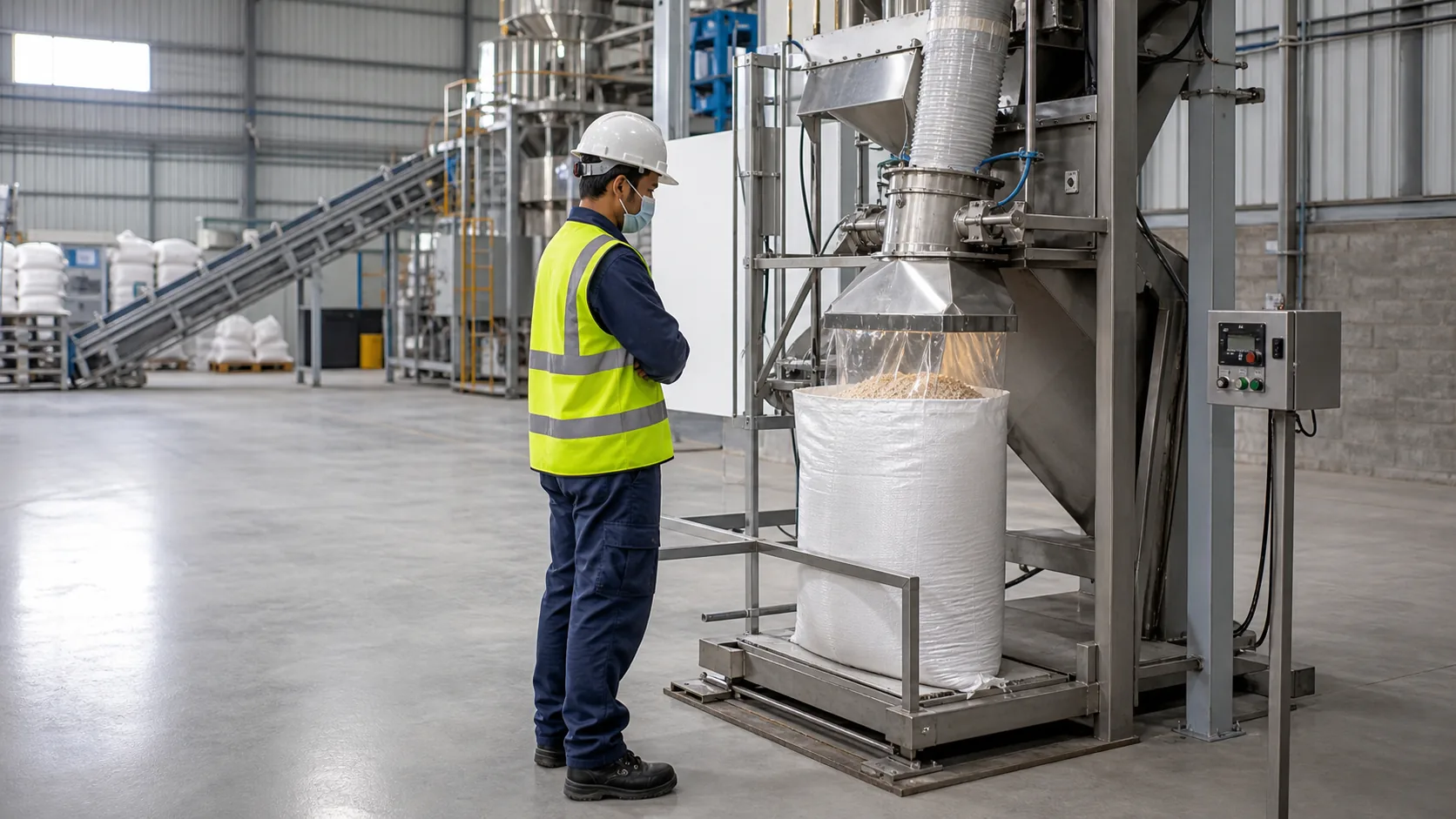
Quick Answer
Find where dust first appears. Capture it close to the bag mouth, shorten the product drop, slow the final fill, clamp the bag evenly and give displaced air a controlled exit. Test each change with the actual material and bag.
These principles apply to rice, beans, grains, feed pellets and dry pet food, although each product needs its own settings.
Why Does Dust Appear During Bagging?
Dust around a grain bagging station usually comes from four things: excessive product drop, unstable feeding, a poor bag-to-spout fit, or displaced air escaping around the bag mouth. Installing a larger dust collector may help, but it will not correct these basic process problems.
Product entering a bag pushes air out. If that air is not controlled, it can carry fine particles through gaps around the filling spout. Long free fall, high filling speed and sudden conveyor movement can also create turbulence.
Grain dust can be combustible. Dust collection, housekeeping and ignition controls should be reviewed according to the actual material and local safety requirements.
1. Locate the First Release Point
Watch the complete cycle: bag placement, clamping, fast fill, final top-up, bag release and conveying. Record where dust first becomes visible. Change one setting at a time so you can confirm what actually improves the process.
2. Capture Dust Close to the Source
Local extraction works best when it is close to the bag mouth. An extraction collar, compact hood or partial enclosure may be suitable depending on the bag and product. Avoid excessive suction that removes product, disturbs weighing or collapses thin bag liners.
3. Shorten the Product Drop
A long product fall increases impact when material reaches the bag. Reducing the uncontrolled drop distance and keeping the product stream centered can lower turbulence, reduce dust and help protect fragile grains.
4. Tune Fast and Dribble Feed
Many bagging machines use fast feed for most of the target weight and slower dribble feed near the end. If fast feed continues too long, the final stage becomes aggressive and dusty. Product-specific recipes are useful for rice, beans, feed and pet food.
5. Match the Bag, Spout and Clamp
The bag should fit evenly around the filling spout without folds or gaps. Check bag width, gussets, liners and clamp faces. If dust escapes from the same side every cycle, inspect clamp alignment before increasing extraction airflow.
6. Give Displaced Air a Controlled Exit
Air must leave the bag as product enters. A suitable vented arrangement or extraction space helps control that airflow. A short settling delay before bag release can also reduce dust at the end of filling.
7. Maintain Airflow and Seals
Filters load, ducts leak and seals wear over time. Include the clamp, flexible connections, hood, filters and feeder seals in routine inspection. Recurring dust deposits usually indicate a process leak, not only a cleaning issue.
8. Automate Inconsistent Steps
Automation can improve bag placement, feed timing and conveyor movement. Semi-automatic bagging may suit moderate production, while a fully automatic packing line is useful when higher output and repeatability justify the investment.
Quick Troubleshooting Guide
- Dust around the bag mouth: check bag fit, clamp and hood. Improve the seal and move capture closer.
- Dust plume at the start: check drop height and initial feed. Shorten the drop or soften the initial fill.
- Dust near target weight: check fast-feed cutoff. Change earlier to dribble feed and verify accuracy.
- Dust at bag release: check settling time and conveyor movement. Add a short delay and gentler transfer.
Before Changing Equipment
- Record the material, bag type, target weight and current output.
- Identify where dust first appears.
- Inspect the clamp, spout, seals and extraction point.
- Review fast-to-dribble timing and product drop height.
- Observe bag release and first conveyor transfer.
- Test one change at a time and document the result.
Frequently Asked Questions
Can grain bagging be completely dust-free?
Dust-free is rarely a responsible general promise. Dust can often be reduced substantially, but the result depends on the material, bag, production rate and safety requirements.
Is a larger dust collector always better?
No. If the bag leaks or product drops too far, more airflow may collect saleable product without correcting the source of the dust.
Can extraction affect weighing accuracy?
Yes. Excessive or unstable suction can remove product or disturb filling. Recheck weighing accuracy after airflow changes.
Do rice, beans, feed and pet food need different settings?
Usually yes. Bulk density, particle shape, fines content and flow behavior are different, so product-specific recipes improve repeatability.
Conclusion
Effective dust reduction starts with the filling process. Locate the release point, capture dust close to the source, shorten the drop, stabilize feeding and clamp the bag correctly.
If you are planning a new packaging line or improving an existing bagging station, PAKEWIN can review your material, bag weight, bag sample, required output and factory layout to recommend a suitable weighing and packaging configuration.