
September 25, 2026 | Sustainable Packaging | By PAKEWIN Engineering Team
Quick Answer
When a food manufacturer moves to a recyclable film, pouch or bag, the packaging machine does not automatically need to be replaced. The first step is to compare the approved material with the current pack and identify what changed: stiffness, thickness, coefficient of friction, seal-initiation temperature, hot tack, barrier performance, print response or dimensional tolerance.
Some projects need only a controlled recipe and tooling adjustment. Others require upgrades to tension control, bag opening, forming parts, sealing, cooling, sensors, inspection or downstream handling. A new machine is justified only when the existing equipment cannot create a stable operating window, meet the required accepted output or support the future package range safely and economically.
Why Recyclable Packaging Becomes a Machinery Project
A material can meet a sustainability objective and still be difficult to run. Recyclable and mono-material structures may behave differently from the laminate they replace. Lower stiffness can affect pouch opening and tracking. A narrower sealing window can increase leaks or burn-through. Different surface friction can change web tension, conveyor transfer and pallet stability.
This is why material approval and machine approval are separate decisions. Regulatory, packaging and quality teams define what the pack must achieve. Operations and engineering teams must prove that the complete line can make that pack repeatedly while protecting the food.
PMMI's 2026 packaging trends highlight recyclable and lightweight packaging, modular quick-change equipment, AI-assisted operations, predictive maintenance and automation that reduces labor dependence. Packaging World's 2026 outlook similarly emphasizes practical implementation. For a factory, practicality means measuring good output, defects, changeover time, waste and downtime with the actual material—not approving a package from a short demonstration.
Start With a Material-to-Machine Gap Assessment
Before discussing a retrofit, freeze one candidate specification and collect the supplier's technical data. Compare it with the current approved material across:
- Structure, thickness and tolerance
- Roll width, core, winding and splice requirements
- Bag or pouch dimensions and opening behavior
- Stiffness, curl, static and coefficient of friction
- Seal-initiation temperature and recommended sealing range
- Hot tack, seal strength and cooling requirements
- Barrier, migration and food-contact documentation
- Print, code and vision-inspection contrast
- Storage, conditioning and shelf-life requirements
Also define the product temperature, oil, moisture, dust, particle shape, target weight, production speed and distribution conditions. The word “recyclable” alone is not a machine specification.
Eight Areas Where Packaging Equipment May Need More Flexibility
1. Film Unwinding, Web Tension and Tracking
A change in thickness, elongation or friction can make film wander, wrinkle or stretch. Review unwind braking, dancer response, edge guiding, pull-belt pressure and print-mark control at low, nominal and planned high speed.
The goal is not simply to make the film move. The line must hold registration through acceleration, normal stops, roll changes and splices without creating unstable bag length or seal position. Servo control, closed-loop tension or improved guides may be useful when the current adjustment range is too narrow.
2. Pre-Made Bag Separation and Opening
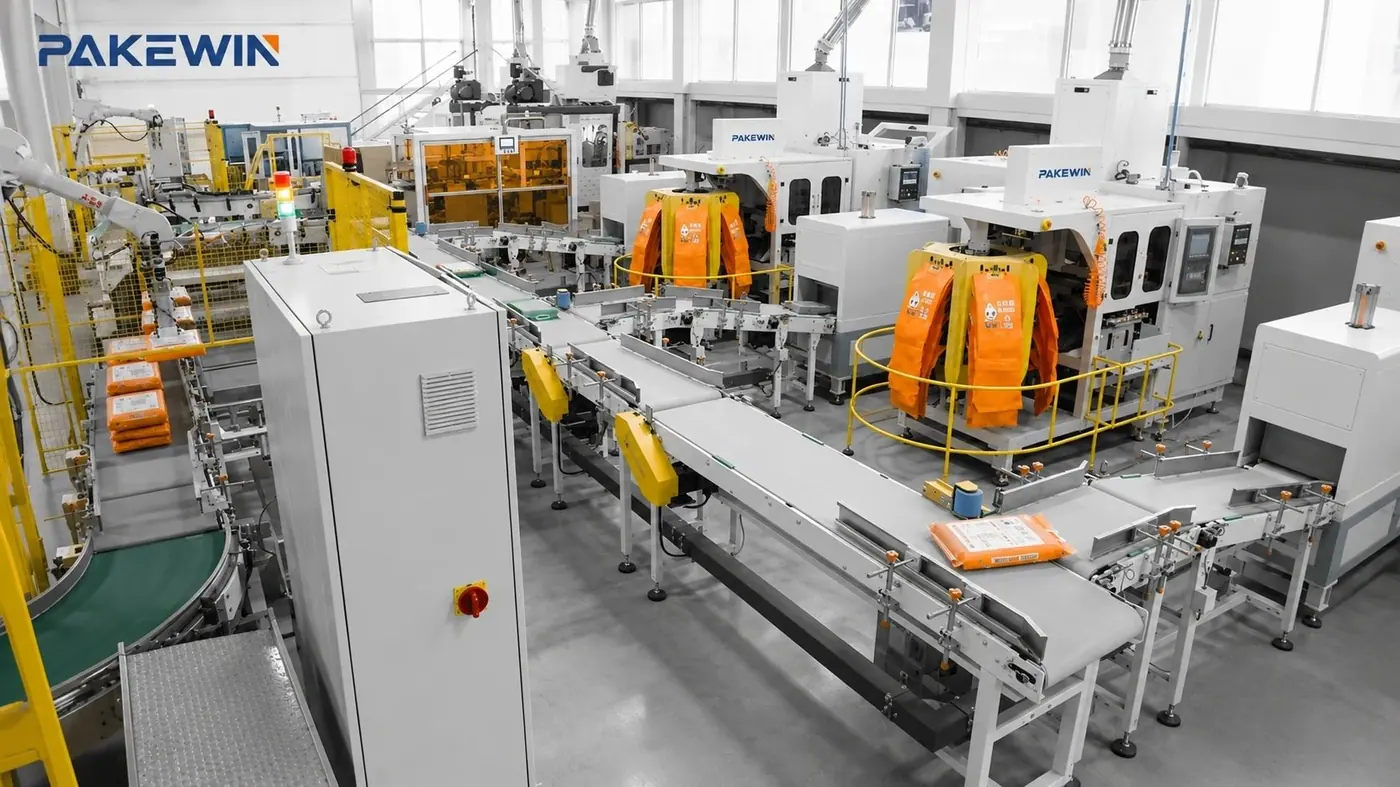
Thin or flexible pre-made bags can cling together, deform under vacuum or fail to stay open during filling. Test magazine loading, pickup cups, vacuum level, air assist, bag-mouth detection, clamps and presentation angle.
A retrofit may involve different suction cups, adjustable guides, static control or a revised bag-opening sequence. The result should be assessed by successful pickups and accepted filled bags per hour, not by empty-bag demonstrations.
3. Forming Parts and Package Geometry
On vertical form-fill-seal equipment, a new structure may behave differently around the forming shoulder and tube. Look for scuffing, curling, trapped folds, gusset drift and inconsistent package length. Forming parts may need a different surface finish, geometry or clearance.
For vacuum and brick-shaped packs, verify gas removal, pack density, corner formation and seal protection. A material that forms a good flat pouch may not create a stable brick pack or stack reliably. PAKEWIN's vacuum packaging equipment illustrates the machine categories where the final bag, product and forming requirement must be evaluated together.
4. Sealing, Cooling and Contamination Control
Many recyclable structures have a different operating window from conventional laminates. Establish a documented combination of jaw temperature, pressure, dwell time, cooling and line speed. Do not qualify the material at only one temperature.
Test the low, nominal and high limits that may be used in production. Include realistic product contamination at the seal area, normal stops and hot restarts. Inspect channels, wrinkles, burn-through, delamination, seal strength and leaks after the pack has cooled.
Possible upgrades include more accurate temperature control, independent seal zones, improved pressure distribution, longer dwell, active cooling or redesigned jaws. The correct solution depends on the material and pack—not on the sustainability label.
5. Filling, Dust Control and Product Protection
Thinner packs and different seal layers can be less tolerant of product impact or contamination. Review drop height, filling speed, settling, bag support and dust extraction. For powders, uncontrolled dust may prevent a recyclable structure from sealing consistently even when the empty-film test is successful.
For grains, seeds and snacks, check puncture, abrasion and product breakage. For hot or chilled products, verify the actual material behavior at operating temperature. Feeding and weighing settings may need to change so that the package reaches the sealing station clean and correctly supported.
6. Sensors, Coding and Inspection
Material color, transparency, reflectivity and print treatment can change how photoelectric sensors, registration controls and cameras respond. Revalidate print-mark detection, date coding, barcode readability, vision inspection, metal detection and checkweighing with the finished pack.
PAKEWIN's dynamic checkweigher can be integrated after packaging where weight verification and automatic rejection are required. Final inspection settings and validation must match the product, package, conveyor condition and quality plan.
AI vision can help classify defects or detect patterns, but it still requires representative images, controlled lighting, defined reject rules and a process for reviewing false accepts and false rejects. It should support quality decisions rather than replace a validated inspection method.
7. Conveying, Case Packing and Pallet Stability
A package can leave the sealing station correctly and fail downstream. Changes in stiffness or surface friction may cause shingling, slipping, rotation or unstable accumulation. A hot seal may also be damaged by immediate compression or a sharp transfer.
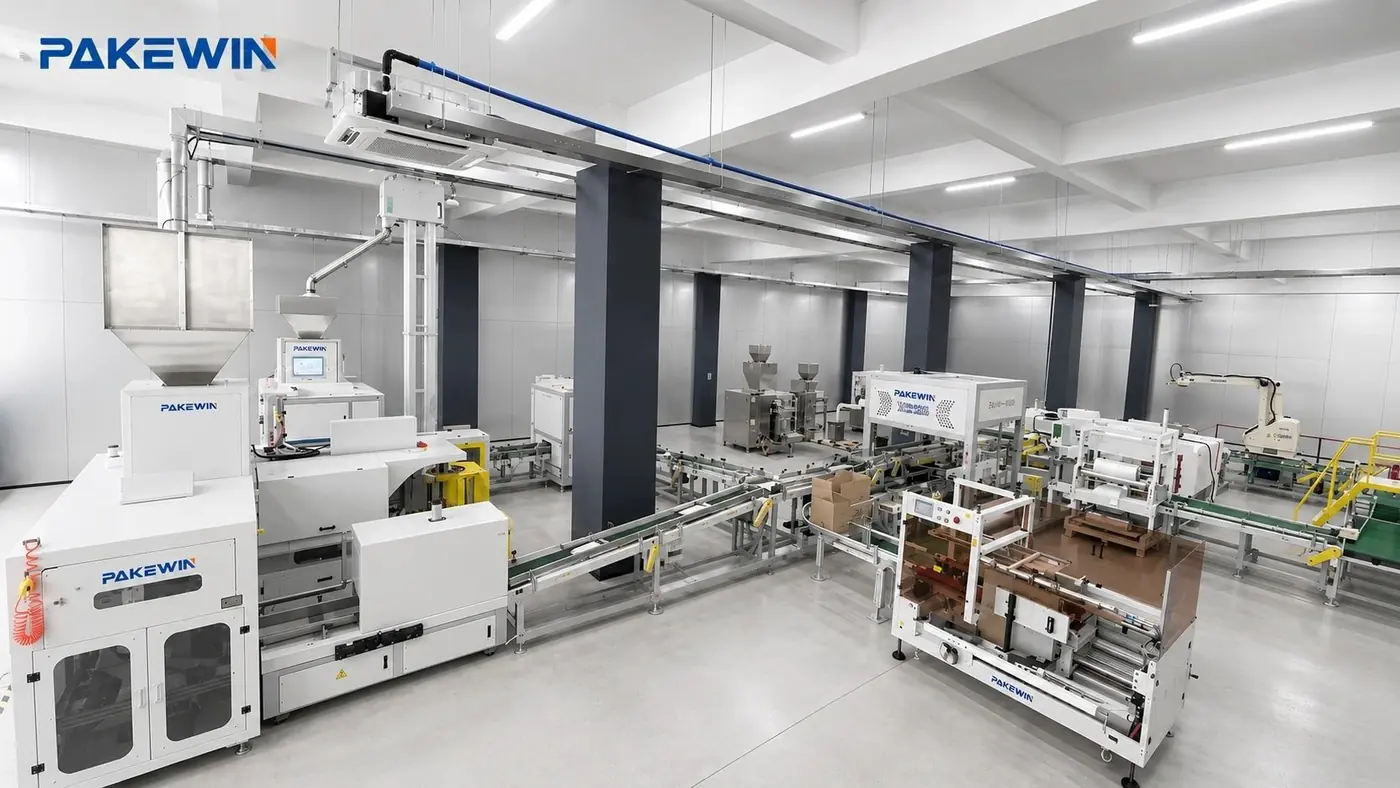
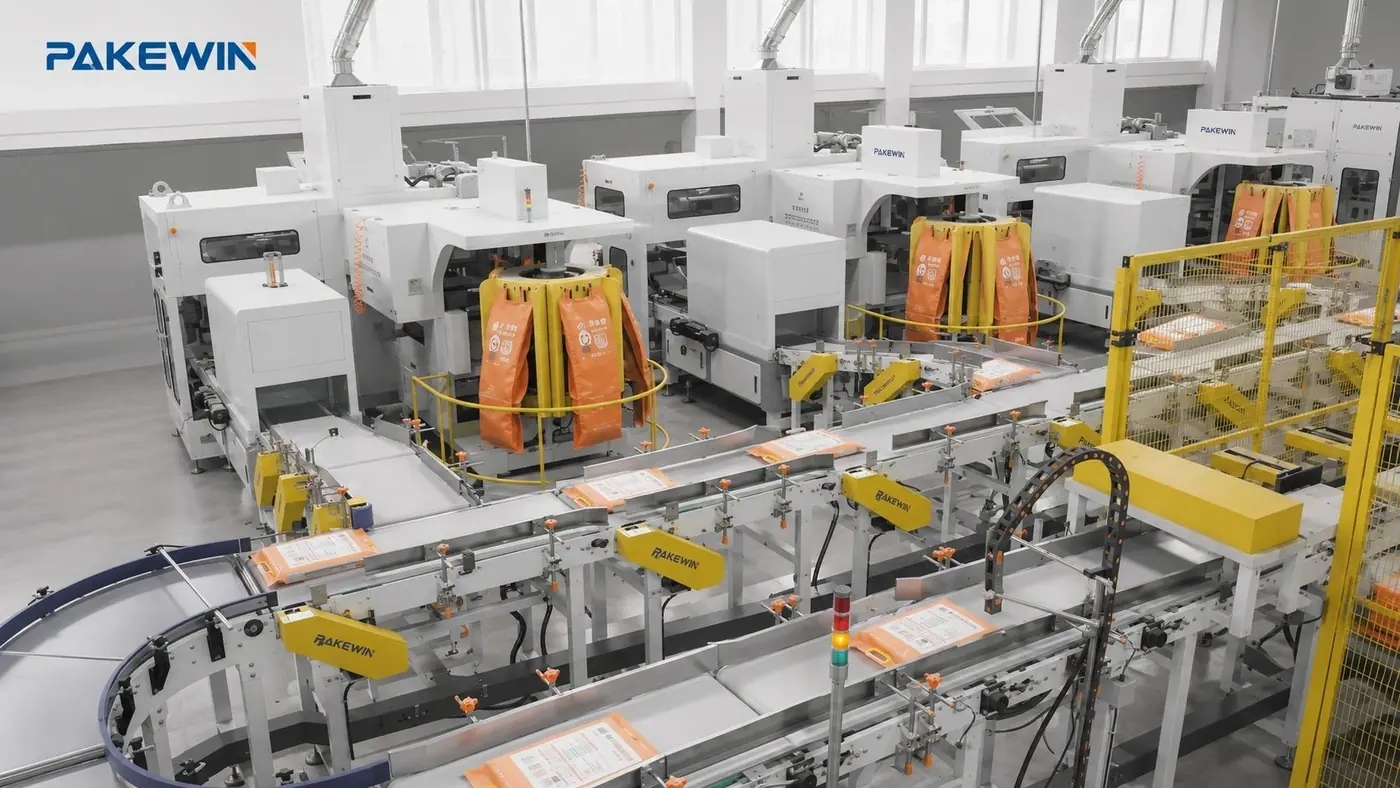
Follow the pack through conveyors, rejection, case packing, robotic handling, palletizing and stretch wrapping. Confirm case count, pallet pattern, compression and transport stability. The automatic packaging line should be assessed as one process rather than a collection of individually functioning machines.
8. Recipes, Data and Maintenance
Store the approved settings for each product-material combination: tension, temperature, pressure, dwell, speed, sensor thresholds, reject limits and change parts. Control who can change critical values and keep a revision history when material suppliers or specifications change.
Reliable data also supports maintenance. Trend heater performance, temperature recovery, motor load, vacuum, vibration, alarm frequency and reject reasons where they are relevant. Predictive tools can help identify deterioration, but they need trustworthy sensors, consistent naming and enough operating history. AI cannot compensate for missing maintenance records or poorly defined faults.
Recipe Change, Retrofit or New Machine?
A Recipe or Tooling Change May Be Enough When
- The material runs within the machine's existing tension and sealing range.
- Feeding, forming and opening remain stable at the required output.
- Existing sensors and inspection devices can be recalibrated.
- Seal quality and waste meet the agreed acceptance limits.
- The changeover remains practical for production staff.
A Retrofit Is More Likely When
- Temperature, pressure, tension or vacuum control lacks repeatability.
- New forming parts, guides, grippers or seal jaws are required.
- Sensors cannot reliably detect the new surface or print mark.
- Cooling, dust extraction or downstream support is insufficient.
- The machine has adequate mechanical life and the retrofit can be safely integrated.
A New Machine or Line May Be Justified When
- The existing frame, controls or safety system cannot support the upgrade.
- Required output cannot be achieved inside a stable operating window.
- Multiple future materials and formats exceed the practical changeover range.
- Obsolete components make the retrofit difficult to support.
- The total installed retrofit cost and production disruption approach the value of a better long-term platform.
The decision should compare installed cost, accepted output, waste, downtime, serviceability and future formats—not just the purchase price.
A Practical Qualification Plan
Use a staged trial that another shift or supplier can reproduce:
1. Incoming inspection: confirm material identity, dimensions, condition and supplier documents. 2. Low-speed setup: establish safe feeding, forming, filling and sealing. 3. Operating-window test: challenge planned low, nominal and high settings. 4. Stop-start test: include normal stops, restarts, acceleration and a roll or bag refill. 5. Sustained run: operate long enough to expose heat drift, dust buildup, static and material variation. 6. Downstream test: inspect coding, rejection, conveying, cases and pallets. 7. Quality hold: repeat seal, leak and protection checks after the specified conditioning time. 8. Handover: lock the recipe, train operators and define escalation limits.
The necessary run length depends on product risk, production volume and the manufacturer's quality plan. There is no responsible universal number of test packs.
Metrics to Record Before Approving the Upgrade
- First-pass good packages as a percentage of total production
- Accepted packages per scheduled hour
- Seal defects, leaks and visual defects
- Material scrap per 1,000 accepted packs
- Unplanned stop minutes and stop causes
- Changeover time to the first verified good pack
- Weight giveaway and checkweigher rejects
- Code and vision-inspection pass rates
- Product damage and contamination at the seal
- Case and pallet stability after handling
Measure the current and candidate material under comparable conditions. A lower material price can be lost through downtime and scrap; a higher price can be justified if accepted-pack cost improves.
How Flexibility Reduces Labor and Training Pressure
Flexible equipment does not remove the need for skilled people. It reduces avoidable manual adjustment and makes approved work easier to repeat. Useful features include recipe-controlled settings, clear alarms, guided changeovers, automatic verification, accessible cleaning points and documented recovery procedures.
AI-assisted troubleshooting can help operators find manuals, compare alarm histories or preserve knowledge from experienced technicians. However, the advice must be connected to the correct machine version and approved procedure. Safety isolation, quality release and parameter changes should remain under qualified human control.
For international projects, also confirm documentation language, remote-support boundaries, spare-parts identification and the responsibilities of the local team. These details affect how quickly a factory can sustain the new material after the supplier leaves.
Information to Send a Packaging Machinery Supplier
A useful retrofit or new-line enquiry should include:
- Current and proposed material specifications
- Product type, temperature, dust, oil and flow behavior
- Target weight, bag dimensions and closing method
- Required sustained accepted output
- Photos and video of the existing line
- Machine model, year, controls and available drawings
- Current defect, waste and downtime data
- Coding, inspection and traceability requirements
- Cleaning method and factory environment
- Available utilities, layout and access
- Samples of the intended film, bags or pouches
- Required acceptance tests and implementation date
PAKEWIN can review these inputs, identify likely compatibility gaps and propose sample testing, tooling, retrofit modules or a flexible new packaging line. Send your product, package and production requirements for a preliminary assessment.
Frequently Asked Questions
Can an existing packaging machine run recyclable film?
Possibly. Compatibility depends on the exact structure, thickness, friction, stiffness, seal range, product, package size and required speed. A controlled trial is required.
Does mono-material film always require lower sealing temperature?
No. Sealing behavior is structure-specific. Use the material supplier's starting data, then establish a validated combination of temperature, pressure, dwell time, cooling and speed.
Which packaging machine upgrade should be evaluated first?
Start with the first unstable process observed during a controlled trial. Common constraints include web handling, bag opening, forming, seal control, cooling, detection and downstream transfer.
Can AI solve recyclable packaging defects?
AI can assist with defect classification, alarm analysis and maintenance trends, but it cannot correct an unsuitable material-machine combination. Process limits and acceptance criteria must still be engineered and validated.
How should overseas buyers compare retrofit proposals?
Compare the confirmed material and product range, sustained good output, included hardware and software, safety scope, downtime, testing, documentation, training, spare parts and total installed cost.
What samples should be sent before ordering equipment?
Send production-representative product and packaging materials from the intended suppliers. Include drawings, tolerances, storage conditions and enough quantity for setup, operating-window and sustained-run tests.