
August 28, 2026 | Packaging Automation | By PAKEWIN Engineering Team
Quick Answer
Flexible packaging automation helps food manufacturers respond to demand volatility by reducing changeover time, limiting dependence on repetitive manual work, improving inspection consistency and making production capacity easier to expand. A resilient line is not simply the fastest line. It is a system that can maintain acceptable output and quality when products, bag formats, order quantities or labor conditions change.
For international buyers, the objective is not only to purchase a packaging machine. It is to build a process that can deliver the right product, in the right package, at the required quality—even when production conditions change.
Why Packaging Flexibility Matters in a Volatile Market
Recent industry data helps explain why manufacturers are evaluating capital projects more carefully. A 2026 PETplanet industry update reported year-on-year weakness in food processing and packaging machinery orders, with considerable differences between domestic, eurozone and other overseas markets. The same report noted that high energy costs were pressuring margins while increasing the incentive to consider efficient automated systems.
PMMI's 2026 processing industry report identifies workforce development, hygienic design, inspection, quality control, digital tools and resource efficiency as important priorities. It also points to growing interest in integrated and turnkey solutions rather than isolated equipment purchases.
These signals do not mean that every food market is declining. They show that demand is less predictable and that manufacturers need packaging investments that can support seasonal demand peaks, shorter production runs, new products, different bag formats, changing labor availability and export-market requirements.
What Is a Resilient Food Packaging Line?
A resilient packaging line can continue meeting delivery and quality targets when operating conditions change. The correct design depends on the material, package format, target weight, required output and factory environment.
Useful capabilities include recipe storage for frequent SKU changes, modular weighing and packing equipment for variable orders, automated repetitive handling, in-line inspection, diagnostics, spare-parts planning and expandable end-of-line modules.
1. Reduce Changeover Time
Many food factories package multiple SKUs on the same line. Long changeovers reduce available production time and can make small orders expensive. Buyers should ask whether recipes can be stored, which parts must be replaced for a new bag size, how product-contact parts are cleaned and how long a normal changeover takes with the actual product.
2. Improve Uptime, Not Only Maximum Speed
A high nominal speed does not automatically create higher daily output. Actual production depends on availability, stable operating rate and accepted package quality. Useful indicators include availability, unplanned downtime, changeover time, accepted packages per hour, reject rate, product giveaway, packaging waste and overall equipment effectiveness.
3. Build a Modular Line That Can Grow
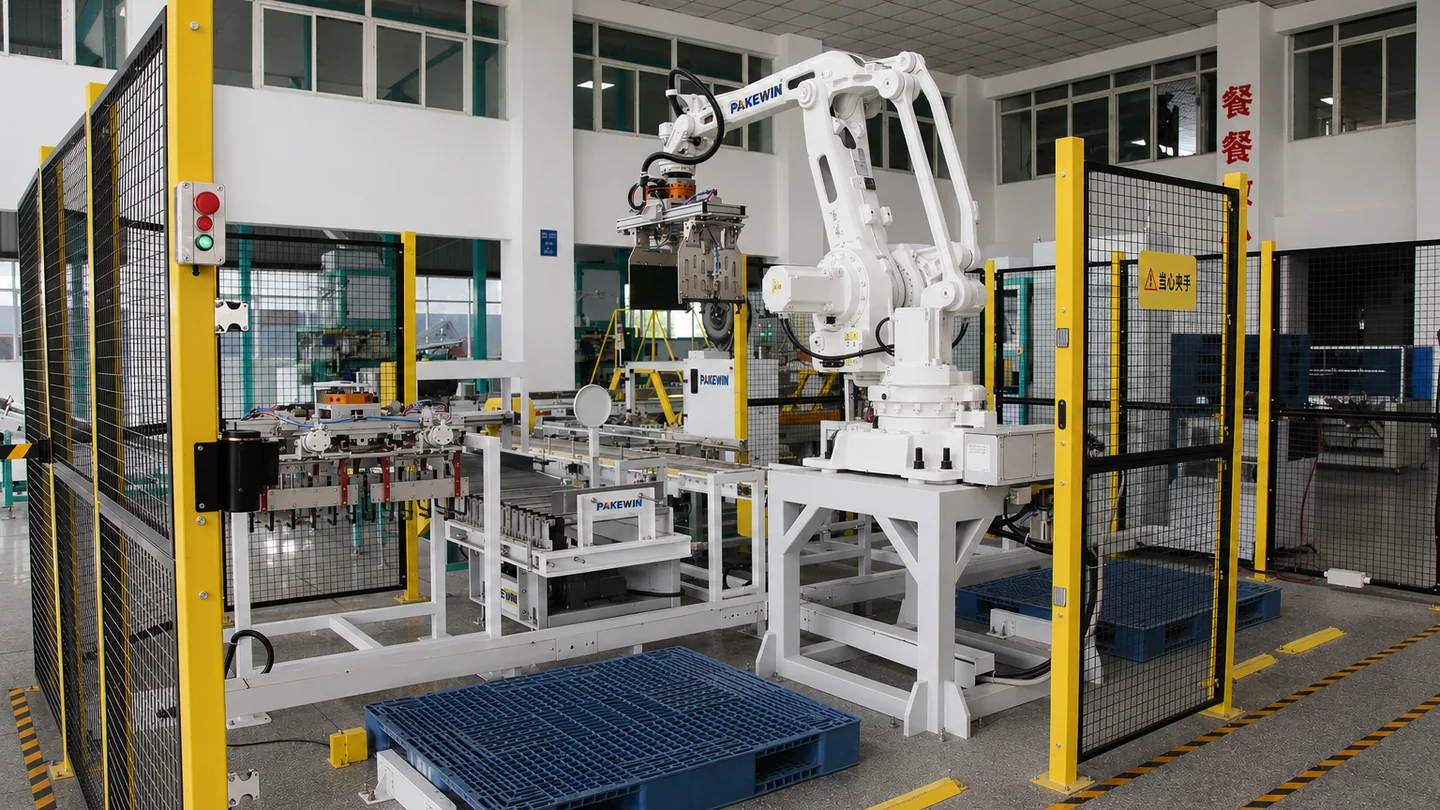
Demand forecasts are rarely perfect. A modular system can begin with the required process and add equipment as production grows. A complete line may connect product feeding, weighing, filling, sealing, checkweighing, metal detection, coding, case handling and robotic palletizing.
Before ordering, confirm conveyor heights, communication signals, electrical standards, line direction, floor space and future capacity. Review PAKEWIN's automatic packaging line solutions.
4. Integrate Inspection
A shipment rejected because of incorrect weight, contamination or damaged packaging can delay payment, interrupt production and increase logistics costs. Depending on the application, inspection may include dynamic checkweighing, metal detection, seal inspection, label verification, vision inspection and automatic rejection. Performance must be confirmed using the actual product, package and production environment.
5. Control Giveaway and Packaging Waste
Small overfills can become a significant annual expense, while underfilled packages create quality or compliance risk. A properly selected weighing and filling process can help control average fill weight, variation, spillage, dust loss, damaged bags and packaging waste. Compare repeatability over a representative test, not a single successful fill.
6. Confirm Utilities Early
International buyers should confirm voltage, frequency, installed power, operating load, compressed-air requirements, vacuum demand, dust extraction, temperature limits and washdown or hygienic construction requirements. Unexpected factory changes can materially increase the installed project cost.
How to Calculate Packaging Automation ROI
Annual measurable benefit = labor savings + recovered production capacity + reduced giveaway + reduced packaging waste + avoided downtime and quality losses
Simple payback period = total installed investment / annual measurable benefit
Include equipment, tooling, freight, duties where applicable, factory preparation, commissioning, training, initial spare parts and validation costs. Use the buyer's actual production data rather than generic industry averages.
How International Buyers Should Evaluate a Supplier
A professional overseas proposal should define material characteristics, target weight, bag construction, sustained capacity, accuracy, product-contact materials, utility standards, line interfaces, inspection requirements, documentation language, acceptance criteria, spare parts, warranty boundaries and support procedures. Buyers should ask suppliers to distinguish confirmed values from estimates and values that require material testing.
Digital Technical Content Influences Supplier Shortlisting
Industrial buyers increasingly research equipment, compare specifications and form a shortlist before speaking with sales. Search engines and AI-assisted tools make accurate technical content part of international customer development. A useful machinery website should answer whether equipment can handle the material, what output is realistic, which utilities are needed, how integration works and how testing and support will be managed.
A Practical Implementation Roadmap
1. Define the product, package, output, factory conditions and current problems. 2. Measure labor, output, downtime, changeovers, waste and rejects. 3. Select only the weighing, packing, inspection and handling functions required. 4. Test the actual product and packaging materials. 5. Agree on factory and site acceptance criteria. 6. Prepare recipes, training, cleaning and maintenance procedures. 7. Compare actual results with the original production baseline.
Frequently Asked Questions
What is flexible packaging automation?
It is a system designed to handle multiple products, target weights, package formats or production volumes with controlled changeover time.
How does packaging automation improve supply chain resilience?
It reduces dependence on repetitive manual work, improves consistency, shortens changeovers and helps factories recover capacity more quickly.
Is the fastest packaging machine always the best choice?
No. Stable accepted output, compatibility, accuracy, uptime, cleaning and changeover performance are often more important than maximum speed.
Which information is needed to select a food packaging machine?
Provide the material, target weight, bag dimensions, required capacity, voltage, air supply, layout and inspection or hygiene requirements.
Can one line handle several materials?
Often it can, but flowability, bulk density, particle size, dust, moisture, fragility and cleaning requirements must be evaluated.
How should overseas buyers compare quotations?
Compare the complete scope, performance assumptions, accessories, installation requirements, documentation, spare parts and acceptance conditions—not only price.
Build the Line Around Real Requirements
Flexible automation can help food manufacturers manage uncertain demand, labor limitations, quality requirements and future expansion. For a preliminary PAKEWIN assessment, prepare the material name, target bag weight, bag dimensions, required capacity, factory voltage, layout and available photos, videos or samples.
Request a packaging line recommendation.