
September 4, 2026 | Packaging Machinery Buyer Guide | By PAKEWIN Engineering Team
Quick Answer
A reliable packaging machine supplier should be able to match the equipment to your actual material, package and required output; define the complete scope of supply; test representative samples; explain performance assumptions; and provide clear factory acceptance, export documentation, spare-parts and after-sales plans. International buyers should compare verified line performance and total installed cost—not only the machine price.
This guide covers the questions procurement teams, factory managers and engineers should ask when searching for a packaging machinery supplier, automatic bagging machine manufacturer or complete packaging line integrator.
Why Packaging Machine Supplier Selection Matters
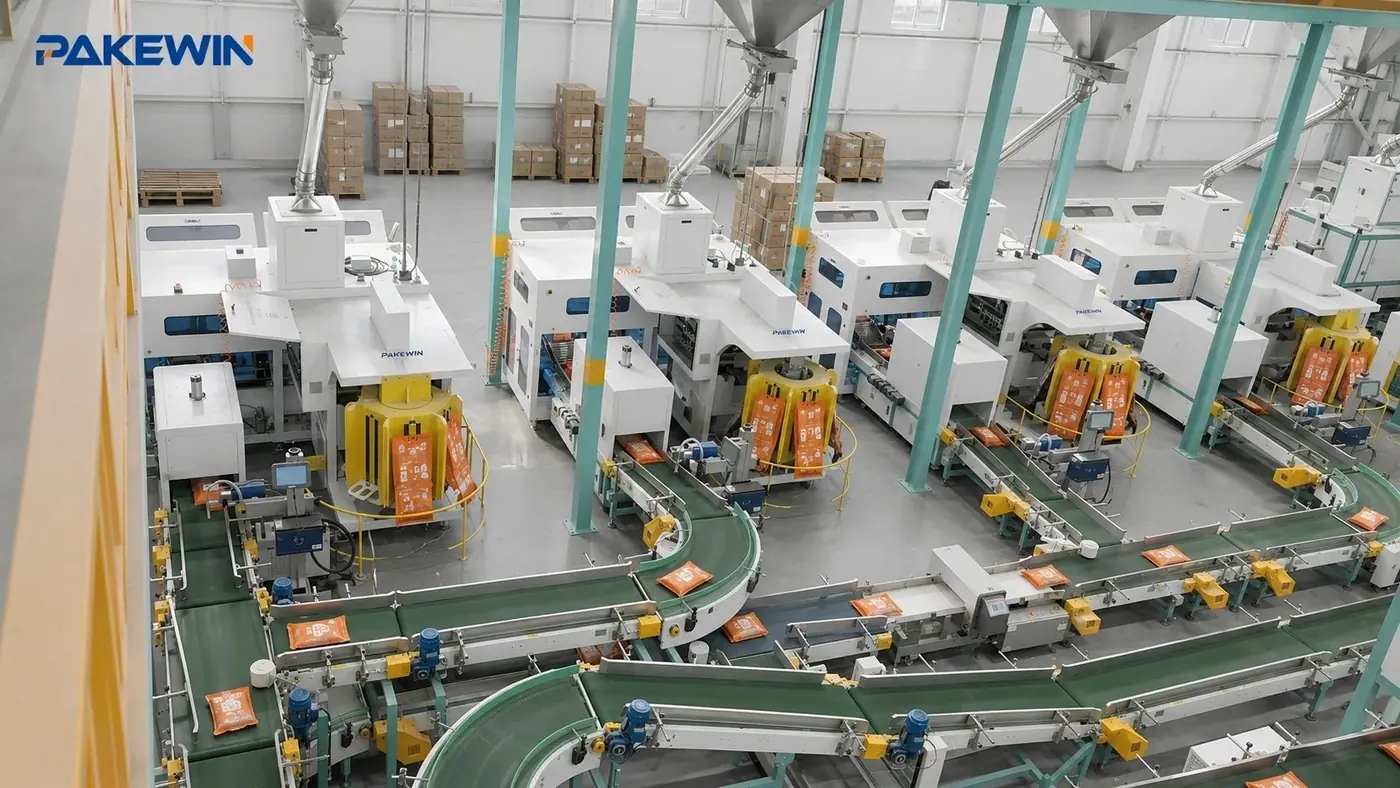
A packaging project can connect feeding, weighing, filling, sealing or sewing, inspection, conveying, case handling and palletizing. Even when every individual machine works, poor line integration can create bottlenecks, unstable bag transfer, excess giveaway or difficult changeovers.
Supplier selection therefore affects more than equipment delivery. It influences commissioning time, accepted output, operator training, spare-parts availability and the factory's ability to support new products later.
PMMI's 2026 processing industry report highlights workforce capability, hygienic design, inspection, quality control, digital tools and resource efficiency as important priorities. These priorities favor suppliers that can explain the complete process rather than provide only a basic equipment list.
How International Buyers Find Packaging Machinery Suppliers
The buying journey increasingly combines traditional Google results with AI-assisted research. Buyers may search for an automatic packaging machine, food packaging machine manufacturer, rice packing machine supplier, powder bagging line or robotic palletizing system. They may then ask an AI tool to compare technologies, identify selection criteria or summarize supplier information.
This is where SEO and GEO overlap. SEO helps a supplier's relevant pages appear in conventional search results. GEO, often called generative engine optimization, makes technical information easier for AI systems to understand and summarize. Neither one proves that a supplier is qualified. Buyers still need drawings, tests, videos, references and agreed acceptance criteria.
A 2025 PMMI Media Group machinery buying study reported that supplier-generated content such as case studies, webinars and technical thought leadership plays a significant role in early research. For buyers, useful content is a starting point for verification—not a substitute for engineering review.
12 Questions to Ask a Packaging Machine Supplier
1. Have you handled a material similar to ours?
Ask about products with comparable particle size, bulk density, flowability, moisture, dust, oil content, fragility and temperature. Rice, beans, seeds, pet food, flour and chemical powders can require different feeders, weighing systems and dust-control arrangements.
A supplier should explain which details are confirmed and which require sample testing.
2. Is the quoted capacity realistic for our product and package?
Maximum machine speed is not the same as sustained accepted output. Confirm the target weight, bag size, bag material, closing method, feeding stability and reject allowance used in the capacity estimate.
Ask for a stated operating range instead of relying on one ideal demonstration cycle.
3. Can you test our actual product and packaging materials?
Representative testing can reveal bridging, dust, product breakage, sealing contamination, film handling or bag-positioning problems before shipment. Agree on the sample quantity, bag or film specification, test method and expected result.
If the final product cannot be shipped, discuss a material with comparable handling characteristics and document the limitations of the test.
4. What is included in the complete line scope?
Request a clear line layout and responsibility list covering feeding, weighing, filling, bag closing, inspection, rejection, conveying, palletizing, controls and safety guarding. Clarify which interfaces belong to the supplier and which belong to the buyer or another contractor.
Review PAKEWIN's complete automatic packaging line solutions to understand how individual processes can be connected.
5. Which product-contact materials and hygiene features are provided?
For food packaging machinery, confirm product-contact materials, surface finish where relevant, cleaning access, removable parts, dust collection, contamination risks and any washdown requirements. Do not assume that the same construction is suitable for every food application or local standard.
6. How long does a real product or bag changeover take?
If the factory produces several SKUs, ask which settings are recipe-controlled, which parts need manual adjustment and which change parts are required. The supplier should explain cleaning and restart procedures as well as the mechanical changeover time.
7. How will weighing accuracy and inspection be verified?
Define the test quantity, target weight, tolerance, product conditions and method used to report results. Depending on the application, the line may require a dynamic checkweigher, industrial metal detector, vision inspection or automatic reject system.
Inspection performance must be confirmed with the actual product, package and production environment.
8. Are the utilities and controls suitable for our country and factory?
Confirm voltage, frequency, phase, compressed-air pressure and consumption, vacuum demand, installed and operating power, control language, approved components, communication protocols and environmental limits. Also check line direction, conveyor height and available floor space.
9. What will be tested during the Factory Acceptance Test?
A useful FAT plan defines the test product, package, run duration, output, accuracy, reject checks, alarms, safety functions and required records. It should also explain how open items will be handled before shipment.
Live video alone is helpful evidence, but it is stronger when supported by an agreed test protocol. Buyers can review PAKEWIN machine operation videos and packaging automation projects before defining project-specific tests.
10. Which export and installation documents are included?
Ask for the packing list, commercial documents, manuals, electrical drawings, pneumatic diagrams, foundation or layout information, recommended spare-parts list and installation requirements. Confirm the language and delivery format before ordering.
11. What happens after the machine arrives?
Clarify installation responsibility, remote or on-site commissioning, operator training, warranty boundaries, troubleshooting channels, expected response process and availability of critical spare parts. Ask how software backups and control-system parameters will be protected.
PAKEWIN's global project and after-sales support page explains the main service stages international buyers should discuss.
12. What is the total installed cost and expected payback?
Compare equipment, tooling, freight, duties where applicable, factory preparation, installation, training, initial spare parts, maintenance, labor, product giveaway, packaging waste and downtime. A lower purchase price can produce a higher total cost if important functions or services are excluded.
Use your actual operating hours, labor rates and production losses when calculating ROI. Generic savings percentages should not replace a project-specific calculation.
Packaging Machinery Supplier Red Flags
Be cautious when a proposal provides a very broad capacity claim without test conditions, promises one machine for materially different products without explaining change parts, omits utilities or line interfaces, uses only stock images, avoids discussing FAT criteria, or gives unclear warranty and spare-parts terms.
Another warning sign is an unusually low quotation that cannot be compared line by line with other proposals. The missing scope may appear later as conveyors, dust extraction, compressors, inspection equipment, commissioning or factory modifications.
How to Compare Packaging Machine Quotations
Create one comparison sheet and use the same requirements for every supplier. Include the material, package, target weight, sustained output, accuracy basis, contact materials, utilities, line scope, inspection, changeovers, FAT, documentation, installation, training, warranty and spare parts.
Mark every item as included, optional, excluded or requiring confirmation. This makes differences visible and reduces the risk of selecting a quotation that appears inexpensive only because the scope is incomplete.
Information to Send for an Accurate Proposal
Prepare the following before contacting a packaging machine manufacturer:
- Product name, photos and handling characteristics
- Bulk density, particle size, moisture, dust and temperature where relevant
- Target weight and acceptable tolerance
- Bag, pouch, box or film dimensions and material
- Required sustained output
- Closing or sealing method
- Factory voltage, frequency and compressed air
- Available layout, conveyor direction and height
- Inspection, coding and traceability requirements
- Photos or videos of the existing process
Complete information helps the supplier select the correct feeder, weighing method, packaging machine and downstream automation. Browse PAKEWIN's packaging machine catalog for representative equipment categories.
Frequently Asked Questions
How do I find a reliable packaging machine supplier?
Start with suppliers that publish relevant product and application information, then verify their capability through drawings, representative tests, project videos, acceptance criteria, documentation and after-sales terms.
Should I buy from a packaging machine manufacturer or a trading company?
The company type alone does not determine project quality. Evaluate who owns the engineering responsibility, who integrates the line, who performs testing and who will provide technical support after delivery.
Is a factory visit necessary before buying packaging machinery?
A visit can be valuable for larger or customized lines. When travel is not practical, request live factory video, a documented FAT, machine serial information, test records and a clear method for resolving open items.
How should overseas buyers compare packaging machine prices?
Compare the complete technical and commercial scope, including performance assumptions, accessories, freight basis, installation, documentation, spare parts and acceptance conditions—not only the equipment total.
What should be tested before shipment?
Test feeding, weighing or dosing, package handling, sealing or sewing, output, accuracy, rejects, alarms, safety functions and interfaces using representative materials and an agreed protocol.
What information is needed for a packaging machine quotation?
Provide the product, target weight, package dimensions and material, required output, utilities, layout and inspection requirements. Samples and process videos can improve selection accuracy.
Choose Evidence Over Claims
Search visibility can help international buyers discover a packaging machinery supplier, but the final decision should rely on technical evidence and a clearly defined project scope. The strongest supplier is not necessarily the first search result or the lowest quotation. It is the supplier that can explain the process, verify key assumptions and support the equipment throughout its working life.
Send PAKEWIN your packaging requirements for a preliminary equipment or complete-line assessment.