
August 15, 2026 | Checkweigher Guide | By PAKEWIN Engineering Team
Quick Answer
Choose a dynamic checkweigher from the real package and production process—not from maximum capacity alone. Confirm the minimum, target and maximum package weights; acceptable weight tolerance; package dimensions; line speed; spacing between products; conveyor height; reject method; data requirements; and installation environment. Then test representative products under production-like conditions.
For heavy bags, cartons and cases, stable transfer and sufficient weighing time can matter as much as the nominal belt speed.
What Is a Dynamic Checkweigher?
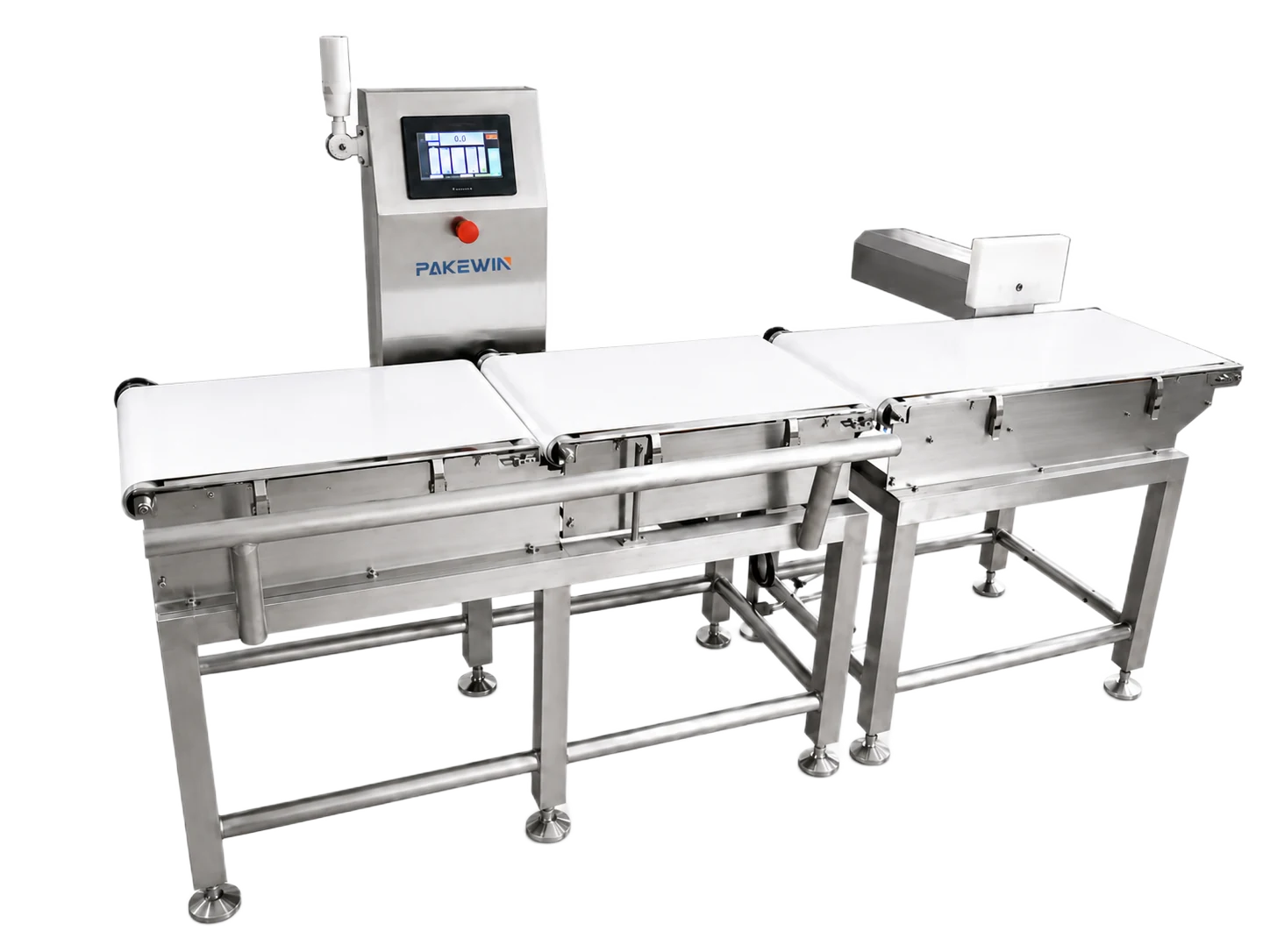
A dynamic checkweigher measures products while they travel through a production line. It compares each measured weight with preset limits and identifies underweight or overweight products. Depending on the line design, an out-of-tolerance product may be rejected automatically or stopped for operator handling.
A checkweigher is normally used for final inspection and process control. It is different from the filling scale that dispenses product into a bag or container. The filling scale controls the dose; the checkweigher independently verifies the finished package after filling, closing or sealing.
Typical applications include open-mouth bags, cartons, boxes, cases and other packaged products.
1. Define the Real Weight Range
Start with three values: the lightest package, the normal target weight and the heaviest package that will pass through the machine. Include the packaging material and any expected product variation.
A machine rated for 50 kg is not automatically the best choice for every package below 50 kg. The weighing platform, load cell range, conveyor construction and control settings should suit the actual operating range. If one line handles several product sizes, list every format before selection.
2. Set the Required Weight Tolerance
Define the acceptable upper and lower limits for each product. These limits may come from internal quality standards, customer requirements or applicable regulations. Avoid confusing display resolution with verified weighing performance: a screen that displays small increments does not by itself guarantee the same production accuracy.
Dynamic accuracy is affected by package stability, belt speed, vibration, airflow, temperature, product movement inside the package and the available weighing time. The responsible way to confirm performance is to test real products at the intended speed and installation conditions.
3. Calculate Throughput from Package Pitch
Belt speed alone does not tell you how many packages can be checked per minute. Throughput also depends on package length and the gap between consecutive products.
A useful planning estimate is:
Packages per minute ≈ belt speed in metres per minute ÷ package pitch in metres
Package pitch is the package length plus the required gap. For example, a 30 m/min conveyor with a 1 m pitch gives a theoretical flow of about 30 packages per minute. This is only a layout estimate. The final rate must allow enough time for product separation, stable weighing, signal processing and rejection.
If products arrive touching each other, the system may not be able to identify and weigh them independently. An upstream spacing conveyor or controlled release may be required.
4. Check Product Size, Shape and Stability
Provide the supplier with the maximum length, width and height, as well as the location of the package center of gravity. Long bags, soft sacks, unstable cartons and products with moving contents behave differently on a weighing conveyor.
Check these details before ordering:
- The complete package must fit on the weighing section.
- The belt must support the product without excessive overhang.
- Conveyor transfers should not catch, tilt or bounce the package.
- Guides must stabilize the product without applying force during weighing.
- The product should settle before it reaches the weighing section.
For large bags and cases, smooth transfer between the infeed, weighing and outfeed conveyors is especially important.
5. Choose the Right Reject Method
The reject device should match package weight, shape, speed and available floor space. Common options include pushers, diverters, drop-flap systems, stop-and-alarm arrangements and operator removal.
A lightweight carton at high speed may need a different reject mechanism from a 25 kg or 50 kg bag. Heavy or unstable products require enough force and a safe receiving area, while delicate packages may need gentler handling. Confirm what happens if the reject bin is full, the product is not removed or the reject device fails to complete its cycle.
6. Review Recipes, Reports and Line Integration
A multi-product line benefits from stored recipes for target weight, upper and lower limits, belt speed, reject timing and other settings. Recipe control reduces setup time and helps prevent operator errors during changeovers.
Useful data functions may include total count, accepted count, rejected count, average weight, deviation trends, batch reports and downloadable production records. If the checkweigher must exchange signals with a filler, sealer, printer, PLC or factory system, define the required interface before manufacture.
7. Evaluate the Factory Environment
A checkweigher is a measuring instrument installed inside a working production line. Its location has a direct effect on performance. Review:
- Floor vibration from nearby machines, forklifts or structures.
- Airflow from fans, doors or dust extraction.
- Product or room temperature changes.
- Dust, moisture and cleaning requirements.
- Electrical supply and grounding.
- Space for operation, maintenance and reject collection.
Install the machine on a stable surface and avoid mechanical contact with neighboring conveyors where possible. Product transfers should be aligned, but surrounding equipment should not transmit unnecessary vibration or force to the weighing section.
8. Confirm Line Height and Product Flow
Measure the existing conveyor height and allowed adjustment range. Also confirm flow direction, available footprint, upstream and downstream equipment, guarding, access and the position of operators.
A layout drawing is more useful than a single overall dimension. It shows whether there is enough straight-line distance for product spacing, weighing and rejection without creating a bottleneck.
Selection Example for 25–50 kg Bags and Cases
For applications involving large bags, cartons or cases up to 50 kg, the HJR-CW12060 dynamic checkweigher provides a 1200 × 600 mm weighing section, 30–35 m/min belt speed, recipe storage and production reporting. Its specified accuracy is ±0.5% to ±1% under defined test conditions. Final performance must be confirmed with the actual package, product behavior, speed and installation environment.
The machine can be integrated into an automatic packaging line after filling and closing equipment and before palletizing or dispatch. The reject arrangement should be selected for the package and line layout.
Information to Send Before Requesting a Quotation
A complete application brief helps the equipment supplier select and test the right configuration. Include:
- Product name and a photo or video of the package.
- Package material and shape.
- Minimum, target and maximum weight.
- Maximum package length, width and height.
- Required packages per minute or per hour.
- Upper and lower acceptable weight limits.
- Existing conveyor height and flow direction.
- Preferred reject method.
- Required reports, recipes and communication interfaces.
- Factory voltage, environment and cleaning requirements.
- A layout drawing and representative product samples if available.
Frequently Asked Questions
What is the difference between a checkweigher and a filling scale?
A filling scale measures and controls the amount dispensed into a package. A dynamic checkweigher independently verifies the finished package while it moves through the line. Using both provides filling control and final inspection.
Can one checkweigher handle different bag or box sizes?
Often yes, if all formats fit the conveyor, weight range and stability requirements. Stored recipes can manage different targets and limits, but very different package dimensions may require guide, spacing or reject adjustments.
Does a faster belt always increase checkweigher output?
No. Output also depends on package length, gap, settling time, weighing time and reject recovery. Excessive speed can reduce stability or cause products to overlap.
How is dynamic checkweigher accuracy confirmed?
Accuracy should be tested with representative packages at the intended line speed and under production-like conditions. Multiple repeated tests are more meaningful than a single reading.
Which reject method is suitable for heavy bags?
It depends on bag stability, weight, speed and layout. A powered pusher, diverter or stop-and-alarm arrangement may be considered. The final choice should be verified through application testing and a safety review.
Conclusion
The best dynamic checkweigher is the one matched to the complete application: package, tolerance, speed, transfer stability, reject strategy, data needs and factory environment. Prepare accurate product information, request production-like testing and review the full line layout before confirming the machine.
PAKEWIN can evaluate your package samples, target weights, throughput and layout to configure an in-line weight inspection solution for bags, boxes and cases.