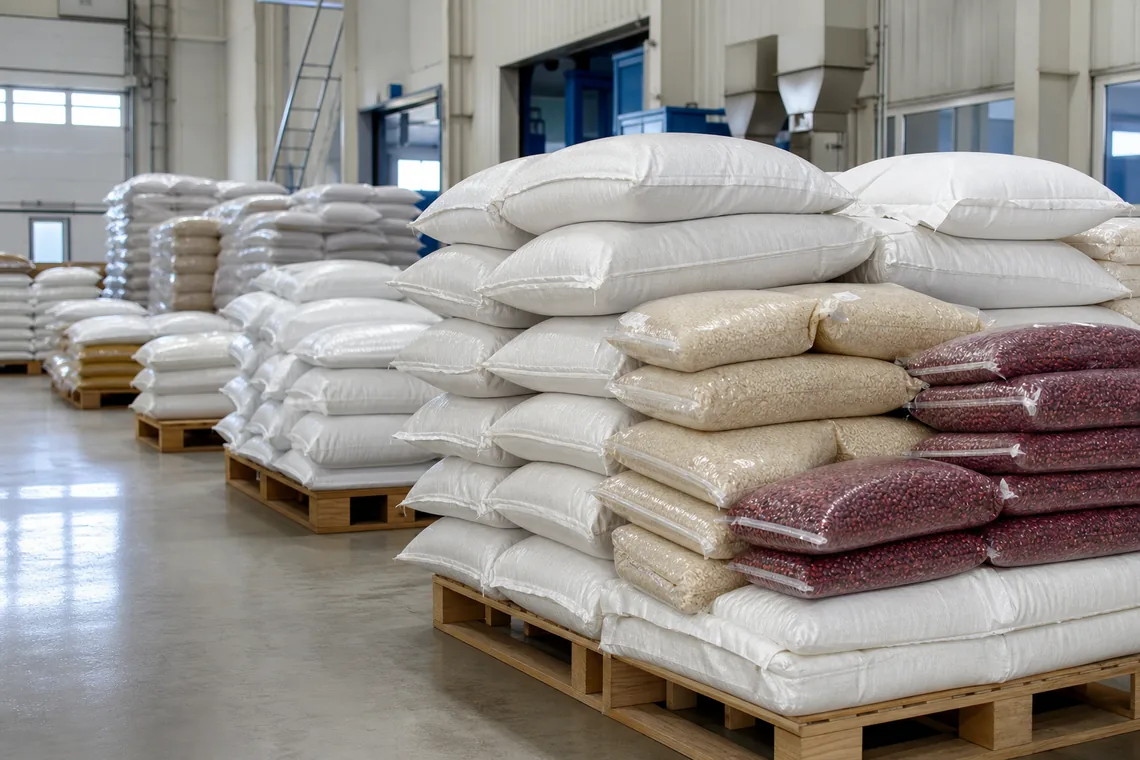
Humidity is a common challenge in rice, bean and grain packaging, especially in tropical regions. When the air is too moist, grains may absorb water during storage, feeding or packing. This can affect product flow, weighing accuracy, sealing quality, vacuum packaging results and shelf life.
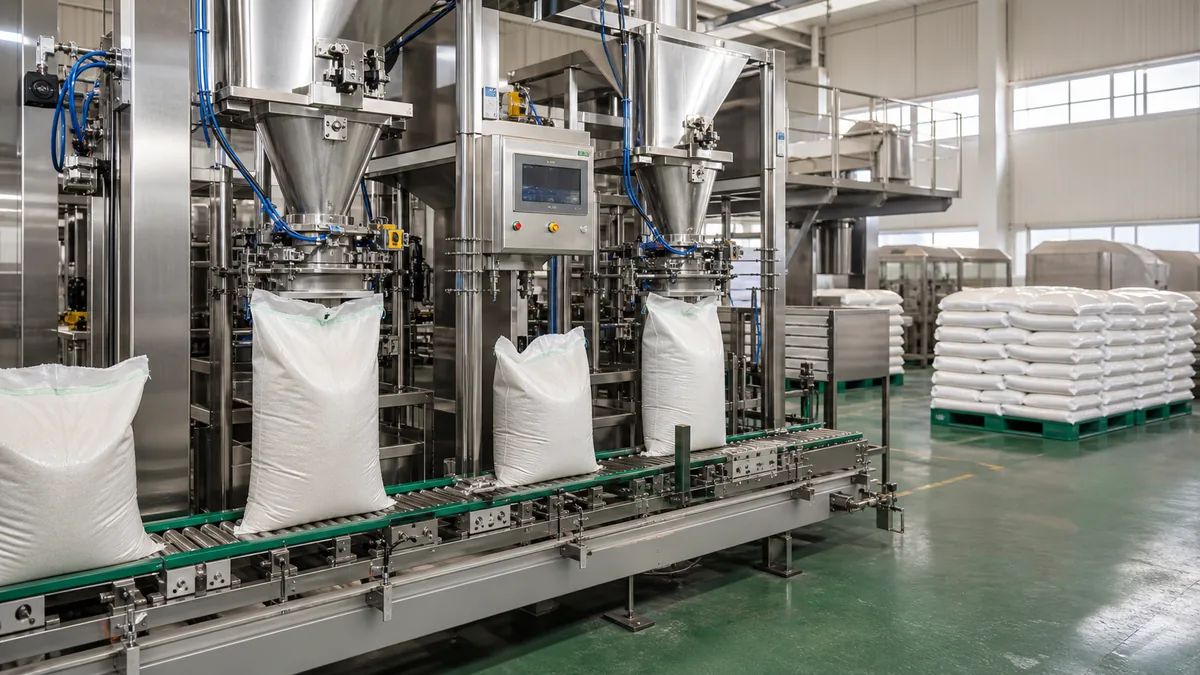
For factories handling rice, beans, wheat, corn or seeds, moisture control is not only a storage issue. It directly affects how stable an automatic bagging machine or vacuum packaging machine performs every day.
Why Humidity Matters in Grain Packaging
Dry granular products usually flow smoothly. Once moisture increases, the material may become less free-flowing, slightly sticky or uneven in density. This makes the whole packaging process harder to control.
- Rice and grains may flow more slowly into the weighing hopper.
- Beans and seeds may create residue inside feeding parts.
- Bags may become harder to seal, sew or shape.
- Vacuum-packed products may look less tight and less stable.
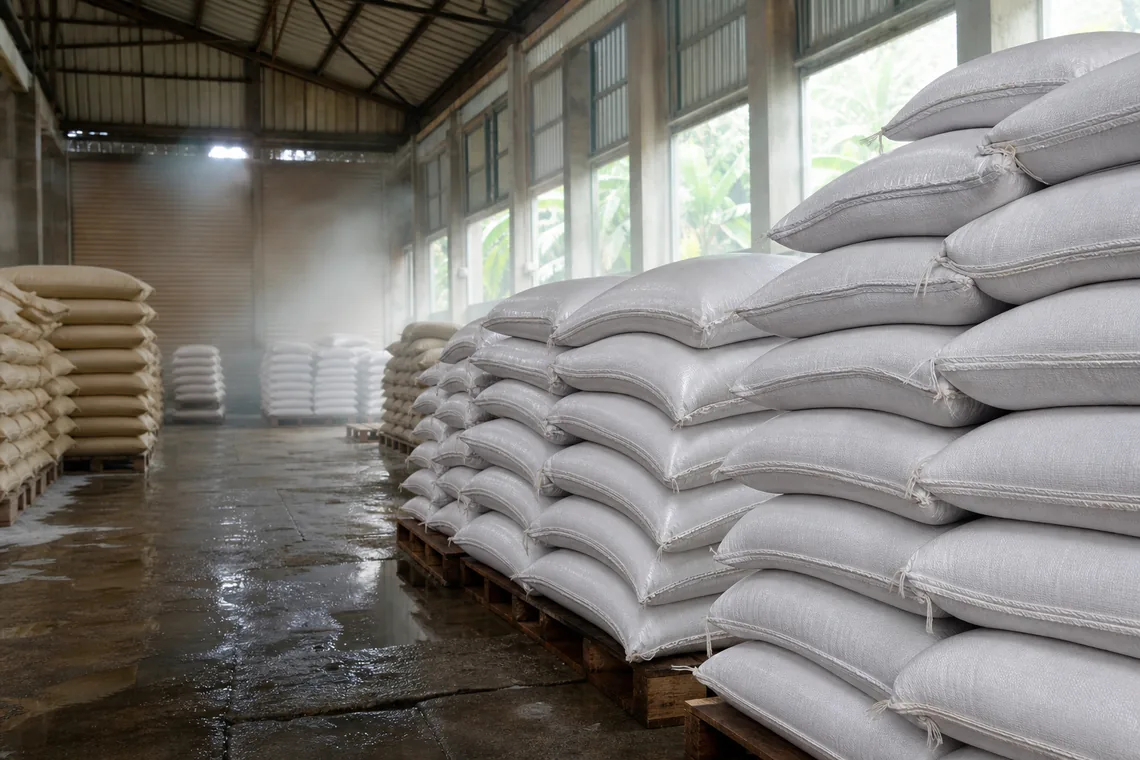
- High moisture can increase the risk of mold during storage.
Common Problems Caused by Humidity
1. Reduced weighing accuracy
When grains do not flow consistently, the weighing system may receive material too quickly, too slowly or unevenly. This can cause overweight bags, underweight bags and more manual adjustment.
2. Product sticking inside the hopper
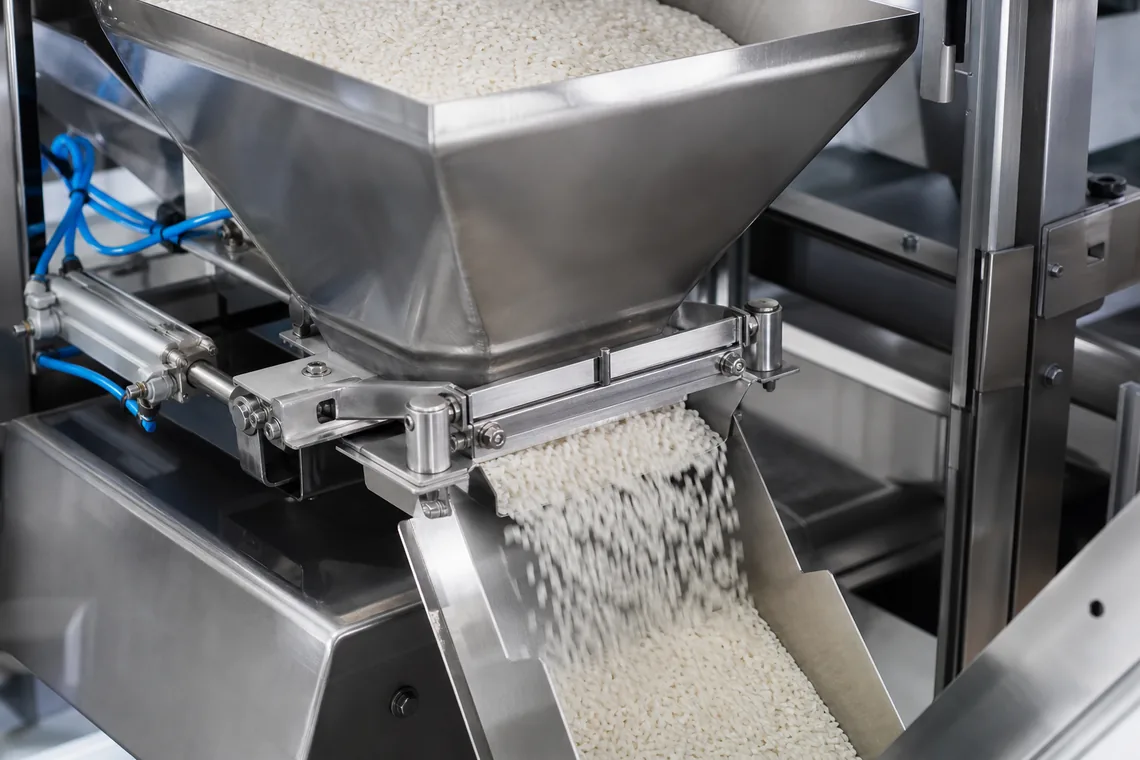
Moist rice, beans or grains can stick to the hopper, feeding chute or transition parts. Over time, residue buildup may slow down production and increase cleaning work.
3. Poor vacuum packaging performance
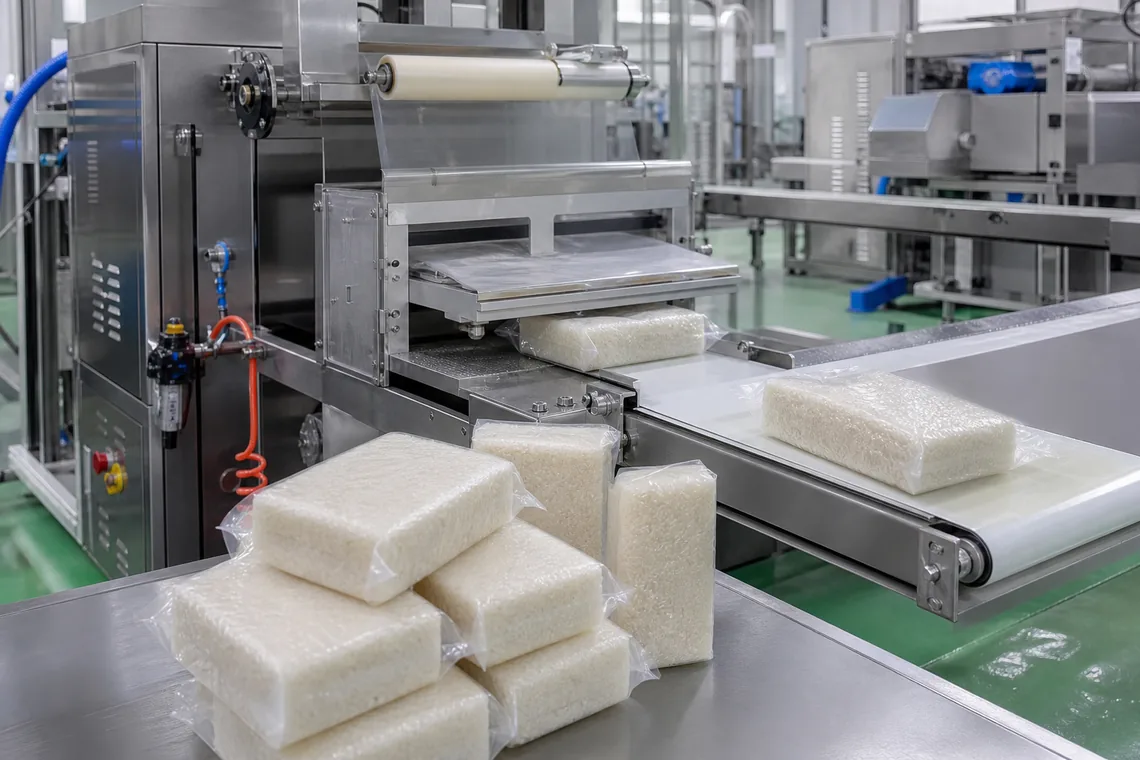
For rice and grain vacuum packaging, excessive moisture may affect air removal and final package shape. The finished brick-shaped bag may look loose or unstable.
4. Bag sealing or sewing issues
High humidity can change the surface condition of woven bags, paper bags or laminated bags. This may affect bag opening, sewing, heat sealing and final bag appearance.
5. Mold and shorter shelf life
Humidity can reduce product quality after packaging. If rice, beans or grains contain too much moisture, the risk of mold increases during storage and transportation.
Practical Solutions for Humid Environments
- Control warehouse humidity and keep raw materials in a dry, ventilated area.
- Store empty bags properly so they do not absorb moisture before production.
- Check product moisture before packing, especially during rainy seasons.
- Use a feeding system suitable for the product's flowability.
- Clean the hopper, feeding chute and sealing area regularly.
- Choose packaging materials that match the product, storage time and transport conditions.
- Select automatic bagging and vacuum packaging equipment designed for stable weighing, smooth feeding and easy cleaning.
Conclusion
Humidity can affect grain packaging in many ways, from weighing accuracy and hopper sticking to sealing quality, vacuum performance and shelf life. For factories in humid regions, the best approach is to manage moisture before packaging and use equipment that can maintain stable performance.
PAKEWIN provides complete bagging and vacuum packaging solutions for rice, beans and grains, helping customers maintain stable packaging performance even in humid environments.