
September 9, 2026 | Sustainable Packaging | By PAKEWIN Engineering Team
Changing to recyclable film or bags? Send your material specification, product, pack size and required output to PAKEWIN to discuss machine compatibility and trial requirements. Send Your Packaging Requirements
Quick Answer
The EU Packaging and Packaging Waste Regulation (PPWR) generally applies from August 12, 2026. It does not provide one universal machine setting or require every producer to use the same packaging material. For a food manufacturer, the practical task is to translate the approved pack specification into a controlled production trial.
Before changing film, pouches or bags, test material feeding, forming, sealing, coding, inspection, product protection, line speed and pallet stability with the actual product. Define acceptance limits before the trial and record the settings, defects, waste and sustained output. A material that is recyclable on paper is not production-ready if it cannot protect the food or run consistently on the line.
This article is an engineering readiness guide, not legal advice. Confirm the rules, dates and obligations that apply to your packaging and market with qualified regulatory specialists.
What Changed in 2026?
The PPWR entered into force on February 11, 2025 and generally applies from August 12, 2026. According to the European Commission, it covers all packaging and packaging waste, regardless of material or origin, and introduces requirements across the packaging life cycle. Its objectives include making packaging placed on the EU market recyclable in an economically viable way by 2030, increasing recycled-plastic use safely and reducing primary raw-material demand.
Not every requirement starts on the same date. Product type, packaging format, company role and later implementing measures can affect what applies and when. The Commission published implementation guidance in March 2026 and a PPWR FAQ in August 2026. Use those official sources as the starting point for compliance decisions.
For operations teams, the immediate question is narrower: Can the packaging line make the approved pack repeatedly, at an acceptable yield, while protecting the product?
What PPWR Readiness Means for Packaging Machinery
PPWR compliance is a packaging and market-access issue; machine readiness is an engineering issue. They meet at the final pack. A redesigned structure may have a different seal-initiation temperature, hot-tack strength, stiffness, thickness, coefficient of friction or barrier performance. Those differences can change how it unwinds, tracks, forms, fills, seals, prints, rejects and stacks.
Do not ask only whether a machine can run “recyclable film” or “mono-material film.” Those labels cover many structures with different behavior. Ask whether the exact supplier specification can achieve the required pack quality across the intended operating window.
Nine Checks Before Changing Packaging Material
1. Freeze the Target Pack Specification
Start with one controlled version of the material. Record the supplier, structure, thickness and tolerance, roll or bag dimensions, sealant layer, surface treatment, coefficient of friction, barrier data, food-contact declaration, storage conditions and recommended sealing range.
Also define the product, target weight, shelf-life requirement, distribution route and closing method. If these inputs continue changing during the trial, the result will be difficult to interpret.
2. Review Material Storage and Handling
Film and pre-made bags can behave differently after exposure to heat, cold or humidity. Confirm storage temperature, conditioning time, roll orientation, splice method and shelf life. Inspect roll edges, winding tension, cores and bag dimensions before blaming the machine for tracking or feeding problems.
3. Test Unwinding, Feeding and Tracking
A change in stiffness or surface friction can affect web tension, dancer movement, registration and pull-belt grip. During the trial, watch for wandering film, telescoped rolls, wrinkles, stretching and inconsistent print-mark detection.
For pre-made open-mouth bags, check magazine separation, bag pickup, mouth opening and clamping. Thin or highly flexible bags may need different vacuum, guide or gripper settings.
4. Confirm Forming Performance
On vertical form-fill-seal equipment, observe the film around the forming shoulder and tube. Look for scuffing, curling, gusset drift, trapped folds and unstable package length. A film that runs at low speed may still become unstable during acceleration, stop-start cycles or roll splices.
Record mechanical changes separately from recipe changes so the accepted setup can be reproduced.
5. Establish a Real Sealing Window
Do not qualify a material from one temperature setting. Test a defined combination of jaw temperature, contact time, pressure and line speed. Include normal product contamination risks at the seal area.
Inspect seal appearance, channel leaks, wrinkles, burn-through, delamination and seal strength after cooling. When shelf life depends on barrier performance, use the appropriate leak, integrity and product-protection tests—not appearance alone.
6. Verify Coding and Inspection
A new surface can change ink adhesion, thermal-transfer quality, laser response, camera contrast and code readability. Confirm date and batch coding at normal speed, after stops and across the supplier's material tolerance.
Recheck vision inspection, metal detection and dynamic checkweighing with the finished pack. A change in pack stiffness or surface reflection can require guide, trigger or camera adjustments.
7. Recheck Filling and Weight Control
Sustainable material changes do not remove the need for accurate dosing. Confirm that the pack stays open during filling, the product stream does not contaminate the seal and the package supports the target weight.
Measure average net weight, standard variation, underweight and overweight rejects, product giveaway and accepted output. For powders, review dust extraction and seal contamination. For grains or snacks, check drop impact and product breakage.
8. Follow the Pack Through the Whole Line
A pouch can leave the sealer correctly and still fail downstream. Test transfers, checkweighing, metal detection, case packing, robotic handling, palletizing and stretch wrapping. Look for slippery packs, unstable stacks, crushed seals and abrasion.
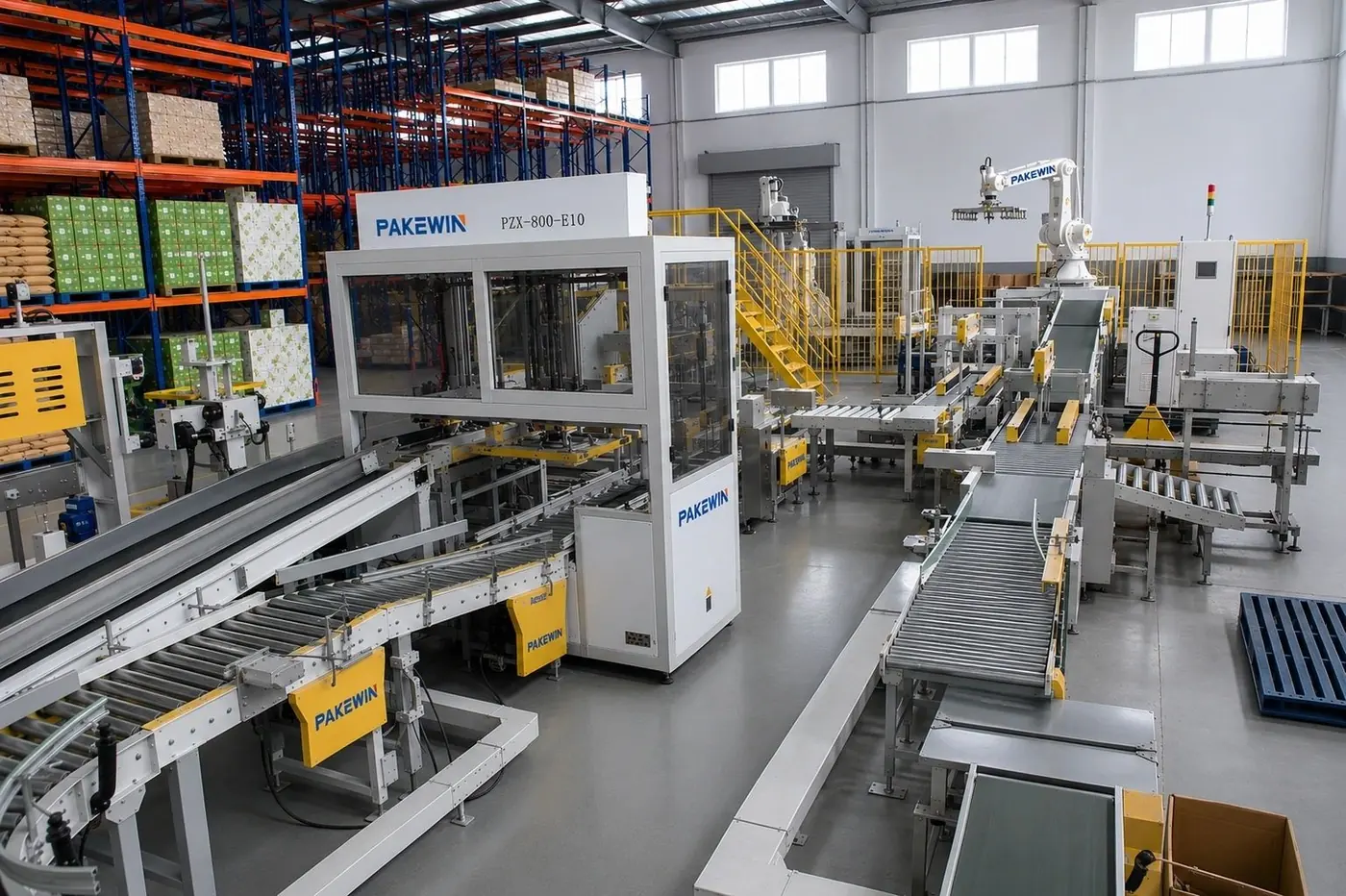
If the format affects case count or pallet pattern, update the line layout and logistics data before launch. PAKEWIN's automatic packaging line solutions show how primary packaging, inspection, conveying and palletizing interact.
9. Document the Production Trial
Create a trial record that another shift can reproduce. Include material batch, machine identification, recipe version, jaw temperature, pressure, dwell time, speed, tension settings, rejects, waste, downtime, inspection results and sample photographs.
Retain approved packs from the beginning, middle and end of the run. Record open issues and owners rather than treating a successful short demonstration as full qualification.
A Practical Trial Protocol
A useful qualification sequence moves from controlled checks to sustained production:
- Incoming inspection: verify the material identity, dimensions, roll condition and supplier documents.
- Low-speed setup: establish safe feeding, forming, filling and sealing without chasing maximum output.
- Operating-window trial: test planned low, nominal and high settings for temperature, speed and other critical variables.
- Stop-start challenge: include normal stops, restarts, acceleration, deceleration and a roll splice or bag refill.
- Sustained run: operate long enough to expose heat drift, material variation, dust buildup and downstream accumulation.
- Quality hold: repeat seal and pack tests after samples have cooled and conditioned for the specified time.
- Handover: lock the approved recipe, train operators and define what triggers escalation or requalification.
The run length should reflect the risk, output and quality plan. There is no responsible universal number of test packs for every product.
Metrics That Make the Decision Clear
Agree on measurable acceptance criteria before the material reaches the machine. Useful production metrics include:
- First-pass good packs as a percentage of total packs produced
- Seal defects and leaks per sample or production batch
- Material scrap per 1,000 accepted packs
- Unplanned stop minutes per operating hour
- Sustained accepted packs per minute, not only peak machine speed
- Weight giveaway and checkweigher reject rate
- Code readability and vision-inspection pass rate
- Product damage, breakage or contamination at the seal
- Case and pallet stability after handling or transport simulation
Compare the candidate material with the current approved pack under equivalent conditions. A small increase in film cost can be offset by better yield; a lower material price can be lost through waste and downtime. Use total accepted-pack cost instead of price per kilogram alone.
Different Packaging Formats Need Different Tests
Vertical Form-Fill-Seal Pouches
Prioritize web tension, forming behavior, seal window, hot tack, cutting, print registration and drop resistance. The PAK-VFS1 vertical form-fill-seal machine is an example of the equipment category that should be tested with the final film, product and pack size.
Pre-Made Open-Mouth Bags
Prioritize bag separation, pickup, mouth opening, clamping, dust control, sewing or heat sealing, filled-bag support and pallet stability. Paper, woven polypropylene and lined bags each behave differently; recyclability and machine performance must be assessed against the actual structure.
Vacuum and Brick-Shaped Packs
Prioritize vacuum level, gas removal, bag forming, seal integrity, pack density, corner damage and stacking. Barrier changes can affect shelf-life performance, so machinery trials should be combined with the food manufacturer's product and distribution validation. Browse PAKEWIN's vacuum packing machine range for representative formats.
Five Common Mistakes
- Approving a material from a five-minute run at one speed
- Using the word “recyclable” as a technical specification
- Optimizing seal temperature while ignoring dwell time, pressure and contamination
- Testing the primary machine but not coding, inspection and palletizing
- Changing film, product and pack dimensions in the same trial without controls
The most reliable projects involve the material supplier, food manufacturer, packaging machinery supplier and quality or regulatory teams early enough to exchange real specifications and samples.
Information to Send a Packaging Machine Supplier
For a new line or retrofit assessment, provide:
- Current and proposed packaging specifications
- Product type, bulk density, temperature, dust and oil content where relevant
- Package dimensions, target weight and required barrier or shelf life
- Required sustained output and shift pattern
- Sample rolls, bags or pouches from intended suppliers
- Existing machine models, controls and line layout
- Sealing, coding, inspection and reject requirements
- Cleaning regime and factory environment
- Acceptance criteria and planned compliance timeline
PAKEWIN can review sample materials and products, define a test plan and evaluate the required changes across feeding, weighing, packaging, inspection and downstream automation. Discuss your packaging material trial with PAKEWIN.
Frequently Asked Questions
Does PPWR require every food company to switch to mono-material packaging in 2026?
No single material answer applies to every pack. PPWR requirements and timelines depend on the packaging and the operator's role. Confirm the legal route for the specific pack, then validate the approved structure on the production line.
Can an existing packaging machine run recyclable film?
Possibly, but “recyclable film” is not a machine specification. Compatibility depends on the exact structure, thickness, friction, stiffness, seal window, pack size, product and required speed. Test representative material before committing to production volumes.
Which machine settings usually change with a new film?
Common variables include web tension, tracking, pull-belt pressure, jaw temperature, seal pressure, dwell time, cooling, cutting and speed. Change only controlled variables and record the approved recipe.
Is a successful seal test enough to approve a new package?
No. Qualification should also cover forming, filling, coding, inspection, leak or integrity performance, output, waste, downstream handling, pallet stability and product shelf-life requirements.
Who should participate in a PPWR packaging trial?
The team normally includes packaging engineering, operations, quality, regulatory or legal specialists, the packaging material supplier and the machinery supplier. Product development, procurement and logistics may also need to approve results.
Should I buy new equipment before testing the material?
Not automatically. First define the approved pack and test it. Some applications need only a recipe or tooling change; others may require controls, sealing, tension, inspection or downstream upgrades. A documented gap assessment supports the investment decision.